
Sunn Hemp Cover Cropping for Summer Soil Health: 2024 Essential Farmer’s Guide
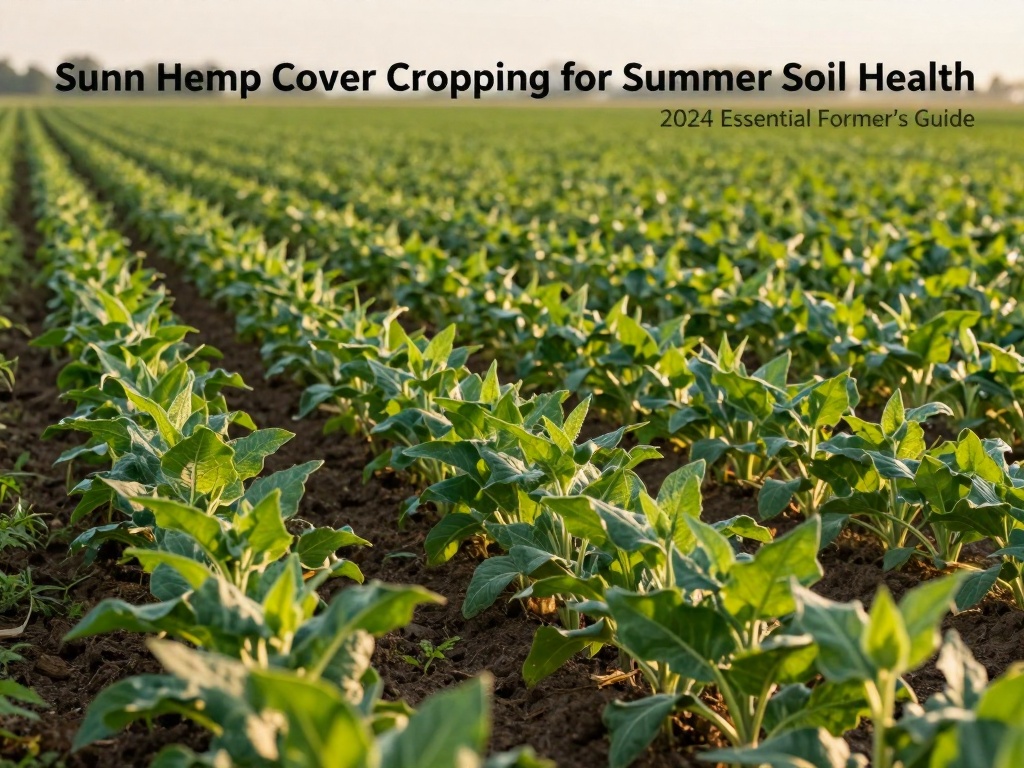
Sunn Hemp Cover Cropping for Summer Soil Health: 2024 Essential Farmer’s Guide
Sunn hemp cover cropping for summer soil health is one of the most effective regenerative practices for small and large-scale farmers across the U.S. This warm-season legume grows quickly, thrives in high temperatures, and fixes atmospheric nitrogen to feed subsequent cash crops. Data from the University of Georgia’s Crop and Soil Sciences department shows sunn hemp can add up to 120 pounds of nitrogen per acre in just 60 days of growth.
Key Benefits of Sunn Hemp for Summer Soil Health
Boosts Soil Fertility and Nitrogen Levels
Unlike many cover crops that require supplemental nitrogen, sunn hemp is a legume that forms symbiotic relationships with rhizobium bacteria to pull nitrogen from the air. This nitrogen remains in the plant biomass, which breaks down over the fall and winter to feed spring cash crops like corn, wheat, or vegetables. University of Illinois extension research confirms this nitrogen reduces synthetic fertilizer needs by up to 40% for subsequent corn crops, cutting input costs significantly.
Suppresses Weeds and Prevents Erosion
Summer rainfall and bare soil are a perfect recipe for topsoil erosion and weed outbreaks. Sunn hemp grows to 6 feet tall in just 8 weeks, forming a dense canopy that blocks sunlight from reaching weed seeds. A 2023 study from the University of Florida found that sunn hemp reduced summer weed growth by 90% compared to bare fallow fields. Its deep taproot also holds soil in place, preventing runoff during heavy summer thunderstorms common in the Southeast and Midwest.
Improves Soil Structure and Water Retention
Sunn hemp’s 2-foot deep taproot penetrates compacted soil layers, creating channels for air, water, and future crop roots to spread. The root biomass also adds organic matter to the soil, which improves water holding capacity by up to 20% according to the U.S. Natural Resources Conservation Service (NRCS). This is a critical benefit for farmers facing increasingly frequent summer droughts, as it reduces irrigation needs and protects cash crops from water stress.
How to Plant Sunn Hemp for Maximum Summer Soil Benefits
Timing Your Planting Window
Sunn hemp is a warm-season crop that requires soil temperatures above 65°F to germinate, so it’s best planted 3 to 4 weeks after your area’s last spring frost. For most U.S. regions, this falls between mid-May and early June, giving the crop enough time to grow to full biomass before the first fall frost. Farmers planting after early summer cash crop harvests like winter wheat can also plant sunn hemp as late as mid-July in northern zones, and mid-August in southern zones to get 45+ days of growth.
Seeding Rates and Soil Preparation
For optimal growth, plant sunn hemp at a rate of 20 to 30 pounds per acre for drill seeding, or 40 pounds per acre for broadcast seeding. Unlike many legumes, sunn hemp rarely needs commercial inoculant for most U.S. soils, as native rhizobium strains typically colonize its roots effectively. You only need to till the top 1 to 2 inches of soil to create a smooth seedbed, and the crop requires minimal additional inputs to thrive.
Termination Best Practices
Terminate sunn hemp 3 to 4 weeks before planting your fall or spring cash crop to allow the biomass to begin breaking down. You can terminate the crop using a roller-crimper for no-till systems, mowing, or a low-rate, residual-free herbicide. Avoid letting sunn hemp go to seed, as it can become an invasive volunteer weed in some southern regions, per NRCS guidelines.
Frequently Asked Questions
Is sunn hemp the same as industrial hemp, and is it safe for livestock?
No, sunn hemp is a distinct legume species that does not produce the psychoactive compounds found in industrial or recreational hemp. It is completely safe for livestock to graze, with a 15-20% protein content that makes it a high-quality forage option for cattle, goats, and sheep.
Can I grow sunn hemp in cold northern climates with short growing seasons?
Yes, sunn hemp requires a minimum of 60 frost-free days to reach sufficient biomass, so northern farmers in zones like Minnesota or Wisconsin can plant it in early June after the last frost and terminate it before the first fall frost in mid-September. Early-maturing sunn hemp varieties bred for short growing seasons are widely available for these regions.
How does sunn hemp compare to other popular summer cover crops like cowpeas?
Sunn hemp grows faster than cowpeas, produces 30% more biomass, and fixes 40% more nitrogen in the same growing window. It also has better drought tolerance than cowpeas, making it ideal for regions with low summer rainfall. However, cowpeas are better suited for heavy clay soils that hold excess moisture, as sunn hemp is prone to root rot in waterlogged ground.
No comments