
Sulfur Amendment for Canola Crop Yields: 2024 Proven Guide to Lift Harvests
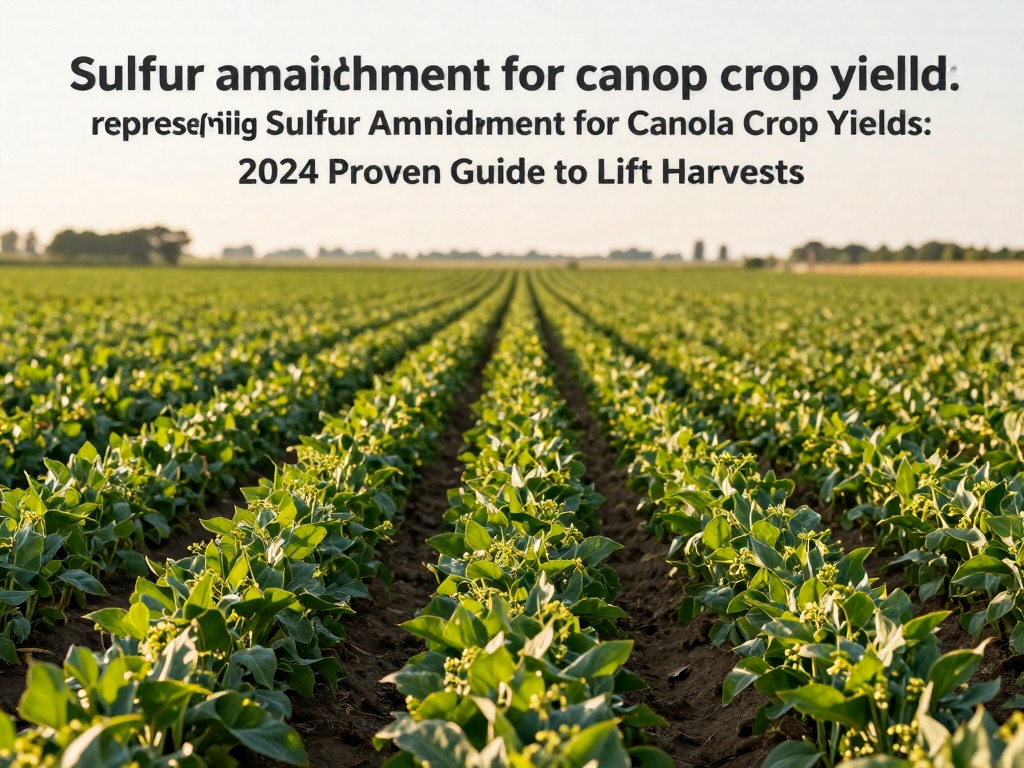
Sulfur Amendment for Canola Crop Yields: 2024 Proven Guide to Lift Harvests
Sulfur amendment for canola crop yields is a non-negotiable soil management practice for commercial and small-scale canola farmers alike. The United States Department of Agriculture (USDA) notes that canola requires three times more sulfur than common cereal grains like winter wheat, making it extremely vulnerable to yield losses from sulfur deficiency. Without adequate sulfur, canola plants struggle to synthesize proteins, oils, and chlorophyll, leading to stunted growth and reduced market value.
Why Canola Is Especially Vulnerable to Sulfur Deficiencies
Rising Sulfur Depletion in Global Agricultural Soils
Over the past 40 years, sulfur levels in most temperate agricultural soils have dropped by 40% to 60%, per a 2023 study from the International Plant Nutrition Institute (IPNI). This decline stems from reduced industrial sulfur emissions, low-sulfur synthetic fertilizers, and intensive crop rotation practices that remove more sulfur from soils than is replenished. Canola’s high sulfur demand means it is the first crop in most rotations to show signs of deficiency.
Common Misdiagnoses of Sulfur Stress in Canola
Early sulfur deficiency in canola appears as pale yellowing of young upper leaves, unlike nitrogen deficiency which impacts older lower leaves first. Advanced deficiency leads to smaller pod formation, fewer seeds per pod, and 15% to 40% lower oil content in harvested canola, per Canola Council of Canada data. Many first-time canola farmers misdiagnose sulfur deficiency as nitrogen stress, leading to wasted input costs and persistent yield gaps.
Optimal Sulfur Amendment Practices to Maximize Canola Yields
Choose the Right Sulfur Source for Your Planting Schedule
Not all sulfur fertilizers deliver the same results for canola. Elemental sulfur requires soil microbes to break it down into plant-available sulfate, making it best for fall application in regions with mild winters. Sulfate-based fertilizers like ammonium sulfate or gypsum are immediately available to plants, ideal for spring side-dress applications if soil tests reveal a deficit. A 2024 University of Illinois trial found that combining 30% elemental sulfur and 70% ammonium sulfate delivered a 22% higher yield than using a single sulfur source.
Follow Recommended Application Rates and Timing
The standard application rate for sulfur in canola is 15 to 30 pounds of actual sulfur per acre, adjusted based on fall soil test results. Soil tests must measure sulfate levels in the top 24 inches of soil, as sulfur leaches easily in sandy, well-drained soils. Spring broadcast application of sulfate sulfur just after seeding ensures young canola plants access the nutrient as they develop their first true leaves. For high-yield canola varieties targeting 80+ bushels per acre, increase the sulfur rate by 10 pounds per acre to support higher biomass production.
Pair Sulfur with Complementary Nutrients
Sulfur works synergistically with nitrogen to boost canola’s protein and oil synthesis. For every 10 pounds of nitrogen applied to canola, farmers should add 1 pound of sulfur to maintain the ideal 10:1 N:S ratio, per Canola Council of Canada guidelines. This ratio ensures neither nutrient limits plant growth, leading to consistent yield gains. Zinc and boron, two critical micronutrients for canola, also improve sulfur uptake when added as part of a balanced soil amendment plan.
Proven ROI of Targeted Sulfur Amendment
Multiple university trials across North America confirm that targeted sulfur amendment increases canola yields by an average of 18% to 25% in sulfur-deficient soils. A 2023 trial in Saskatchewan, Canada, recorded a yield lift from 32 bushels per acre to 41 bushels per acre after applying 20 pounds of ammonium sulfate per acre. At 2024 canola prices of $14 per bushel, that translates to an additional $126 per acre in revenue, far offsetting the $18 per acre average cost of sulfur amendment.
Frequently Asked Questions
When is the best time to apply sulfur to canola?
Fall application of elemental sulfur works for regions with 4+ months of above-freezing temperatures post-application, allowing microbial breakdown to produce plant-available sulfate by spring. For spring planting, apply immediately available sulfate sulfur within 2 weeks of seeding to support early plant growth. Always base timing on your sulfur source and local soil drainage conditions.
Can organic sulfur sources match synthetic amendment yield gains?
Yes, organic sources like composted manure can meet canola’s sulfur needs, though they require application 3 to 6 months before planting to allow for nutrient mineralization. A 2022 Ohio State University study found that properly managed manure applications delivered identical canola yield gains to synthetic sulfur amendments, while also improving long-term soil organic matter levels.
How often should I test soil sulfur levels for canola crops?
Test soil sulfur levels every 2 to 3 years for most canola rotations, or annually if you grow canola in continuous succession or on sandy, well-drained soils. Sulfur leaches easily after heavy rain events, so annual testing for high-risk soils prevents unexpected nutrient gaps that can erase yield potential. Always test the top 24 inches of soil to capture all mobile sulfate reserves.
No comments