
Manganese Supplementation for Soybean Crop Yields: 2024 Grower’s Guide
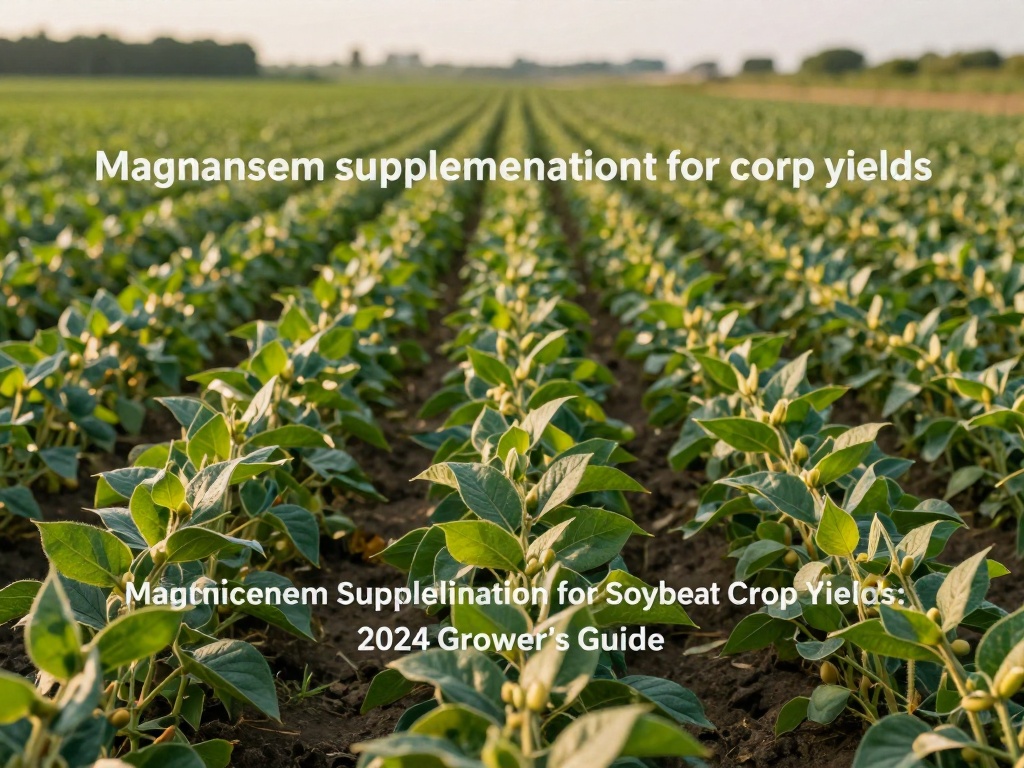
Manganese Supplementation for Soybean Crop Yields: 2024 Grower’s Guide
Manganese is a critical micronutrient that powers core soybean functions, from photosynthesis to nitrogen fixation, and strategic manganese supplementation for soybean crop yields can turn average harvests into record-breaking ones. The University of Illinois Extension reports that 30% of U.S. soybean fields suffer from manganese deficiency, cutting yields by up to 18% in untreated plots. Even minor deficits can weaken soybean resistance to frogeye leaf spot and root rot, leading to unexpected late-season losses.
Why Soybeans Are Especially Vulnerable to Manganese Deficiency
High pH Soil Blocks Manganese Uptake
Soybeans struggle to absorb manganese in soils with a pH above 6.5, a common issue in 40% of Midwestern farm fields per the USDA Natural Resources Conservation Service (NRCS). Alkaline soils bind manganese into insoluble compounds that soybean roots cannot access, even if the mineral is present in the soil profile. Over-liming fields to correct other deficiencies often worsens manganese deficits, creating a hidden yield drag.
Soybean’s Unique Micronutrient Demand
Unlike corn or wheat, soybeans rely on manganese to fuel the nitrogen-fixing bacteria that live in their root nodules. These bacteria require consistent manganese to convert atmospheric nitrogen into a form the plant can use to build pods and seeds. Without enough manganese, soybean plants waste nitrogen reserves, leading to stunted growth and underdeveloped pods at harvest.
Proven Manganese Supplementation Strategies to Boost Yields
Soil-Applied vs. Foliar Manganese: Which Works Better?
2023 research from Purdue University found that foliar manganese applications delivered a 14% higher yield lift than soil-only applications in deficient fields. Foliar sprays, applied at the V3 to V5 soybean growth stage, bypass soil uptake barriers and deliver manganese directly to actively growing leaves. Soil-applied manganese sulfate is a good preventive measure for fields with a history of deficits, as it builds long-term soil micronutrient levels.
Recommended Application Rates and Timing
For foliar applications, the University of Minnesota Extension recommends 1 to 2 pounds of actual manganese per acre, applied twice: once at V4, and again at the early R1 (flowering) stage to support pod development. Soil applications call for 10 to 20 pounds of manganese sulfate per acre, applied at planting to make the mineral available as roots establish. Always test soil and plant tissue levels before application to avoid over-supplementation, which can interfere with iron uptake in soybeans.
Real-World Yield Gains From Supplementation
A 2024 on-farm trial in central Iowa tracked 120 acres of soybeans split into treated and untreated control plots. The plot that received foliar manganese at V4 and R1 produced 6.8 bushels per acre more than the untreated control, translating to $476 per acre in additional revenue at $70 per bushel soybeans. Another trial in Ohio saw a 7.2 bushel per acre lift in fields with a history of high pH soil, confirming that supplementation delivers consistent returns across major soybean growing regions.
Frequently Asked Questions
Can I mix manganese with other foliar sprays for soybeans?
Yes, most manganese formulations mix safely with common herbicides, fungicides, and other micronutrient sprays. Always conduct a small jar test first to check for clumping, and avoid mixing manganese with high-phosphorus fertilizers, which can bind the mineral and reduce absorption.
What are the first visible signs of manganese deficiency in soybeans?
Early signs include interveinal chlorosis (yellowing between leaf veins) on new upper leaves, starting at the V2 growth stage. Severe deficiency causes necrotic brown spots on leaves, stunted plant growth, and reduced pod set later in the season. Tissue tests can confirm deficiency before visible signs appear.
Is organic manganese supplementation effective for soybean crops?
Yes, chelated organic manganese formulations, including manganese EDTA and lignosulfonate, deliver consistent results for organic soybean operations. These formulations resist binding in high pH soils, making them more effective than non-chelated organic manganese sources for most growing conditions.
No comments