
Carrot Spacing for Uniform Root Development: 2024 Grower’s Guide
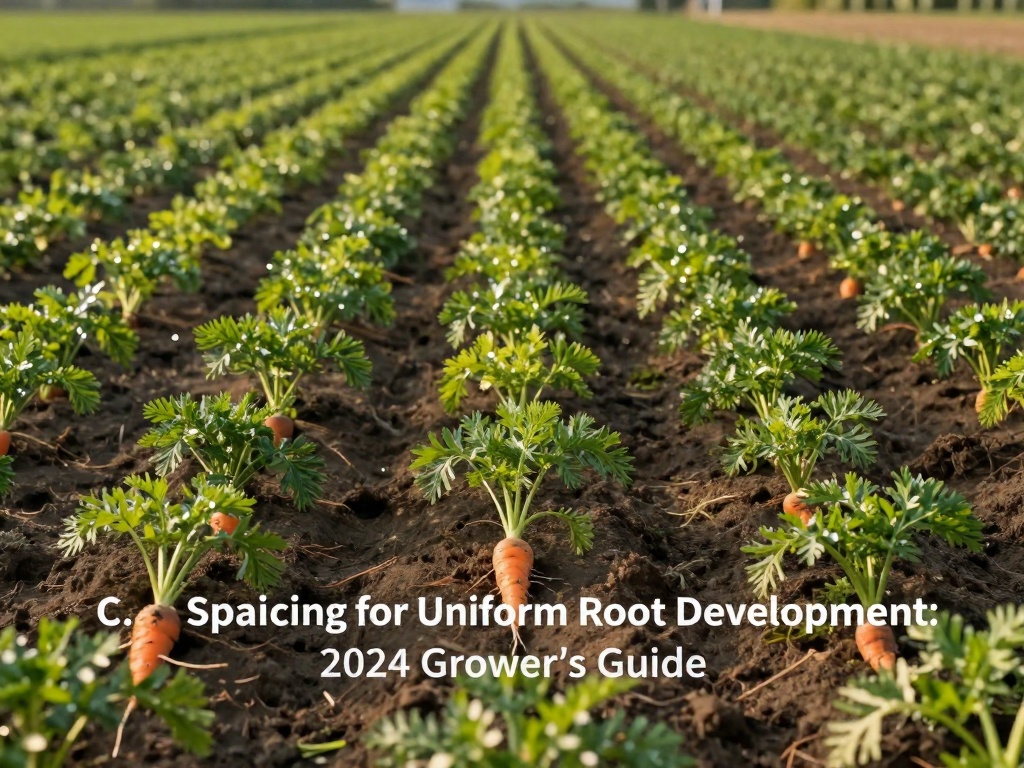
Carrot Spacing for Uniform Root Development: 2024 Grower’s Essential Guide
Proper carrot spacing for uniform root development is non-negotiable for any home gardener or commercial grower looking to harvest consistent, marketable carrots. Stunted, twisted, or undersized roots almost always trace back to overcrowded seedbeds that force plants to compete for water, nutrients, and underground space to expand. Even small spacing errors can cut your usable harvest by 30% or more, according to 2023 data from the University of Minnesota Extension.
Why Spacing Directly Impacts Carrot Root Growth
Underground Obstructions That Distort Roots
Carrots grow a single deep taproot that requires unobstructed soil to reach its full mature size. When seeds are sown too close together, their taproots bump into neighboring root systems, leading to forked, twisted, or stunted carrots that cannot be sold or used. The University of California Agriculture and Natural Resources adds that overcrowded carrots are also more susceptible to fungal diseases, as poor air circulation around foliage traps excess moisture.
Nutrient Deprivation That Causes Uneven Growth
Each carrot plant needs a consistent supply of nitrogen, phosphorus, and potassium to develop a healthy, full-sized root. Overcrowded seedbeds force plants to share limited soil nutrients, leading to uneven growth where a small number of robust carrots outcompete weaker ones. This creates a patchy harvest with a wide range of root sizes, rather than the uniform crop most growers aim to produce.
Optimal Spacing Guidelines for All Carrot Varieties
Short and Baby Carrot Varieties
Baby carrot varieties, which mature in 50-60 days and grow roots 3-4 inches long, require less space than full-size cultivars. Space these initial seeds 1 inch apart in rows that are 12 inches apart. Once seedlings reach 2 inches tall, thin them to a final spacing of 2 inches apart to support unobstructed root expansion.
Standard Full-Size Carrot Varieties
Most common full-size carrot varieties, including Nantes and Imperator, grow roots 7-10 inches long and need more room to develop. Space initial seeds 1.5 inches apart in rows spaced 14 inches apart. Thin seedlings to 3-4 inches apart once they develop their first true set of leaves, per Oregon State University Extension recommendations for uniform growth.
Large Specialty Carrot Varieties
Large heirloom or specialty carrots, such as the 12-inch long Danvers cultivar, require extra spacing to avoid forking. Space initial seeds 2 inches apart in rows 18 inches apart, and thin to a final spacing of 4-5 inches between each plant. This extra space ensures their long taproots can grow straight and reach their full mature size without obstruction.
Pro Tips to Maintain Consistent Spacing
Achieving uniform spacing starts at seeding, as hand-sowing tiny carrot seeds often leads to accidental overcrowding. Use a precision seed seeder that drops one seed every 1-2 inches (matched to your variety’s needs) to eliminate the need for excessive thinning. You can also mix small carrot seeds with fine sand before hand-sowing to spread them more evenly across the seedbed.
Thinning is a non-negotiable step to maintain proper spacing, and it should be done early to avoid disturbing the roots of remaining plants. Snip excess seedlings at the soil line with small scissors, rather than pulling them, to prevent root damage to neighboring carrots. This simple step reduces shock and ensures all remaining plants have equal access to soil nutrients and space.
Frequently Asked Questions
Can I use the same spacing guidelines for container-grown carrots?
Yes, you can adapt these spacing rules for container-grown carrots. For full-size varieties, plant only 2-3 carrots per 12-inch wide container to give their roots enough space to expand. Baby carrots can be planted 4 per 12-inch container, as long as the container is at least 12 inches deep to accommodate their taproots.
What happens if I skip thinning my carrot seedlings?
Skipping thinning leads to severe overcrowding, resulting in 70% or more of your carrots being stunted, twisted, or too small to harvest. Overcrowded plants are also more prone to aphid and fungal infestations, which can spread to the entire crop and ruin your entire harvest.
Can I interplant carrots with other crops without hurting root development?
Yes, intercropping works well for carrots as long as you maintain the required spacing between carrot plants. Pair carrots with fast-maturing crops like lettuce or radishes that will be harvested before your carrots need their full root expansion space. This lets you maximize garden space without sacrificing uniform carrot root growth.
No comments