
2026 Guide: Goat Rotational Grazing for Pasture Health & Farm Profit
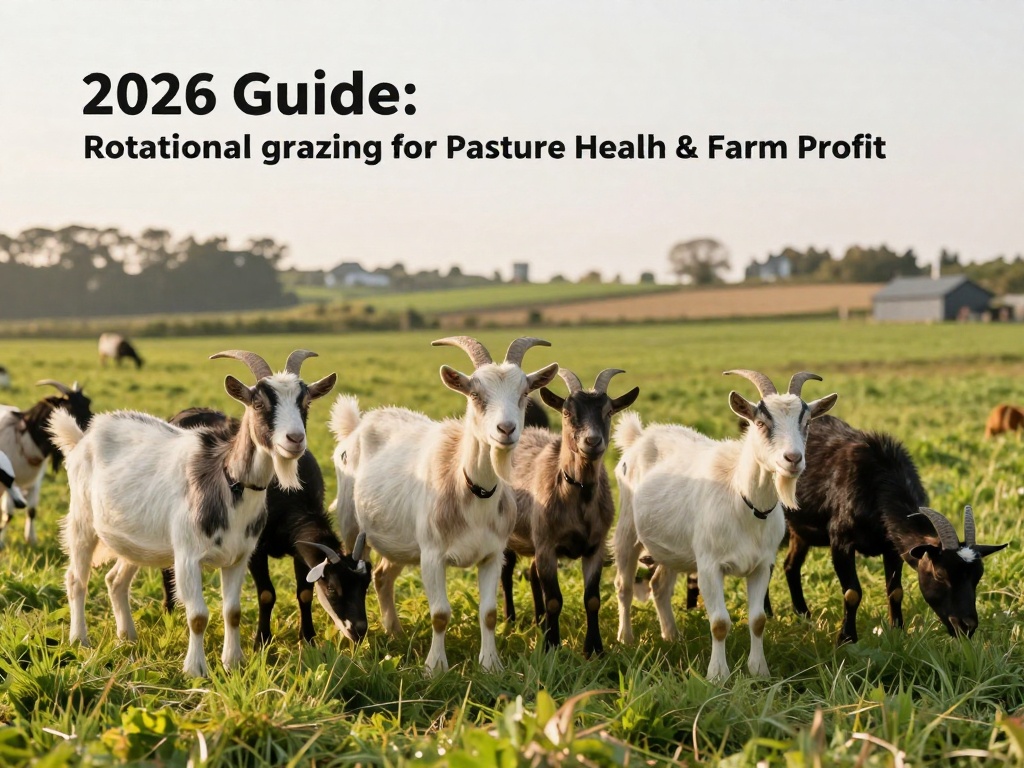
2026 Guide: Goat Rotational Grazing for Pasture Health & Farm Profit
Goat rotational grazing for pasture health is a regenerative farming practice that’s rapidly gaining traction among small and mid-sized goat producers across the U.S. The United States Department of Agriculture (USDA) reports that rotational grazing can boost pasture productivity by 20-30% compared to the common continuous grazing model, where goats have unrestricted access to an entire pasture year-round. This system addresses core pasture health issues while supporting goat welfare and long-term farm profitability.
What Makes Goat Rotational Grazing Ideal for Pasture Health
Core Principles of the Rotational Grazing Model
Rotational grazing works by dividing large pastures into small, fenced subsections called paddocks. Goats are moved from one paddock to the next every 1-3 days, based on herd size and forage availability. Unlike cattle, goats are natural browsers that prefer weeds, brush, and broadleaf plants over grass, so their grazing habits naturally reduce invasive species that would otherwise outcompete nutritious pasture grasses.
How It Solves Common Pasture Degradation Problems
Continuous grazing often leads to bare soil patches, nutrient runoff, and compacted earth, as goats repeatedly eat the same desirable plants and trample exposed soil. Rotational grazing eliminates this risk by giving each paddock a 30-45 day rest period to let grass regrow fully. A 2025 USDA Natural Resources Conservation Service (NRCS) report found that rotational grazing for small ruminants reduces soil erosion by 80% while evenly distributing goat manure, a natural fertilizer that boosts soil nutrient levels.
Key Steps to Implement Rotational Grazing on Your Farm
Map Your Pasture and Build Low-Cost Paddock Infrastructure
The first step to launch your system is to survey your total pasture acreage and map out paddock sizes that match your herd’s forage needs. Most small-scale farmers use portable electric fencing to divide pastures, which costs 70% less than permanent wooden or barbed wire fencing. Paddocks should be sized to let your herd consume 90% of the available forage in 1-3 days, with no leftover undergrazed brush or overgrazed grass patches.
Align Grazing Schedules With Grass Growth Cycles
Rest periods for paddocks vary based on your region’s climate and the type of grass growing in your pastures. Warm-season grasses like Bermuda grass need a 30-day rest period during peak summer growth, while cool-season grasses like fescue require a 45-day rest period in spring and fall. Never re-graze a paddock until grass reaches a minimum height of 6 inches, to avoid damaging root systems that support long-term pasture health.
Monitor Pasture Health to Refine Your System
Conduct monthly pasture checks to track biomass levels, weed presence, and soil moisture. If you notice a paddock has leftover forage after your goats leave, adjust your next rotation to move goats sooner to avoid waste. If a paddock shows signs of overgrazing, extend its rest period by 10-15 days to let it fully recover. Over time, you’ll refine your schedule to match your farm’s unique conditions.
Beyond improving pasture health, rotational grazing cuts annual feed costs by $150-$300 per goat, per NRCS data, by reducing the need for supplemental hay and grain. It also lowers parasite loads in goats, as they move away from manure where internal parasite larvae breed, cutting down on dewormer expenses. Many farmers even qualify for carbon credits for the carbon sequestration benefits of healthy, managed pastures.
Frequently Asked Questions
How many goats can I graze per acre with rotational grazing?
For most temperate pastures, you can sustainably graze 6-10 goats per acre with rotational grazing, compared to just 2-4 goats per acre with continuous grazing. This number is based on 2024 University of Georgia Extension data, which notes that forage availability and goat size may adjust these numbers slightly for individual farms.
Is electric fencing safe to use for goat rotational grazing?
Low-impedance electric fencing is completely safe and highly effective for goats. It discourages escape attempts and keeps common predators like coyotes out, with minimal risk of injury when installed correctly. Most goat farmers use a single strand of electric wire at chest height for adult goats, with a second lower strand to protect young kids.
Can new goat farmers successfully implement rotational grazing?
Yes, rotational grazing is accessible for new goat farmers, even those with limited farm infrastructure. Start with 2-3 large paddocks your first year to learn your goats’ grazing habits, then add more subdivisions as you become comfortable with the system. Many local extension offices offer free farm planning support to help new producers launch rotational grazing.
No comments