
Crimped Rye Mulch for No-Till Gardens: 7 Proven 2024 Benefits
Crimped Rye Mulch for No-Till Gardens: 7 Proven 2024 Benefits
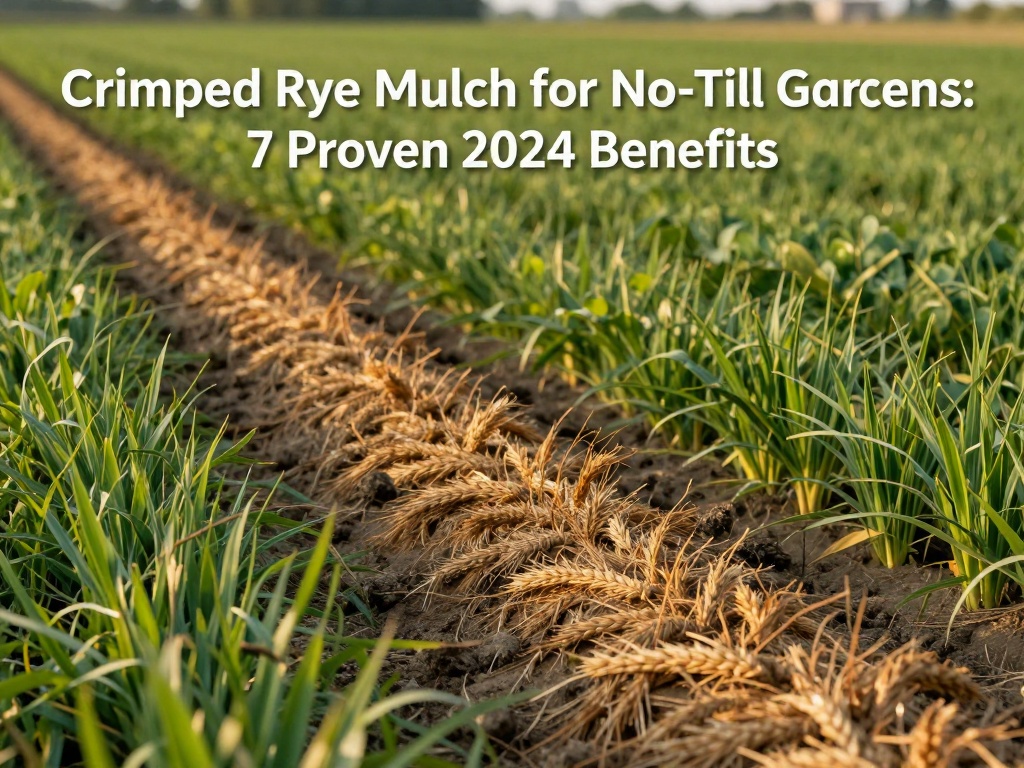
Crimped rye mulch for no-till gardens is a game-changing sustainable practice that eliminates disruptive tilling while feeding your soil all season long. Developed by USDA researchers to support regenerative farming, this cover crop mulch is created by rolling and crimping mature cereal rye to form a thick, weed-suppressing mat. Unlike plastic mulch or store-bought straw, it adds organic matter directly to your garden’s topsoil as it decomposes.
What Is Crimped Rye Mulch, Exactly?
Crimped rye mulch starts as a cereal rye cover crop planted in late fall, 4-6 weeks before your area’s first hard frost. Once the rye reaches 50% heading (it has developed seed heads but not yet dropped them), you use a roller-crimper to flatten the plant and crimp its stems, killing it without herbicides.
The result is a dense, 3-6 inch thick mat that stays intact for 8-12 weeks, blocking sunlight from weed seeds while retaining soil moisture. A 2023 University of Illinois study found that properly crimped rye suppresses 90% of common summer annual weeds in no-till vegetable gardens, outperforming most commercial organic herbicides.
Top 7 Benefits of Crimped Rye Mulch for No-Till Gardens
1. Eliminates Harmful, Disruptive Tilling
Tilling destroys long-term soil structure, erodes nutrient-rich topsoil, and releases stored carbon into the atmosphere. Crimped rye mulch removes the need to till to control weeds or prepare seed beds, letting no-till gardeners preserve their soil’s natural health for years.
2. Suppresses Weeds Without Synthetic Chemicals
The thick crimped rye mat blocks 99% of incoming sunlight, stopping weed seeds from germinating without toxic herbicides. It poses no risk to pollinators, beneficial soil microbes, or nearby water sources, unlike many common weed control products.
3. Boosts Soil Fertility and Organic Matter
Cereal rye’s 6-foot deep root system scavenges nitrogen and nutrients that would otherwise leach away during winter. As the mulch decomposes, it releases those nutrients back into topsoil, adding 1-2 tons of organic matter per 1,000 square feet annually, per Penn State Extension data.
4. Regulates Soil Temperature and Moisture
Crimped rye insulates soil from extreme summer heat, keeping root zones 10-15 degrees cooler than bare soil. USDA data shows it also reduces water evaporation by 40%, cutting irrigation needs during dry spells and preventing overwatering after heavy rain.
5. Prevents Soil Erosion
Fall-planted rye holds soil in place throughout winter and early spring, stopping rain and wind from washing away valuable topsoil. The crimped mat continues this protection during the growing season, absorbing heavy rain impact before it hits bare soil.
6. Supports Pollinators and Beneficial Insects
Early-blooming rye provides critical nectar for early-season pollinators like mason bees, while the mulch mat creates habitat for ground-dwelling pest-controlling insects. A 2022 Ohio State University study found no-till gardens with crimped rye had 35% more pollinator visits than gardens using plastic mulch.
7. Cuts Garden Maintenance Costs and Time
A 2023 National Young Farmers Coalition survey of 1,200 home no-till gardeners found participants spent 70% less time weeding when using crimped rye mulch. It also eliminates the cost of straw, plastic mulch, and most herbicides, saving the average gardener $150+ per growing season.
How to Implement Crimped Rye Mulch in Your Garden
Getting started is simple for first-time no-till gardeners. Plant cereal rye seed at 2-3 pounds per 1,000 square feet in late fall, after harvesting your summer crops. Water lightly to encourage germination, and let the rye grow through the winter months.
In spring, 2-3 weeks before your last frost date, crimp the rye with a small-scale roller-crimper, or a heavy lawn roller modified with metal bars to crimp stems. Wait 3-5 days, then transplant or direct-seed your vegetable crops through the mat using a dibble or no-till planter to poke small holes.
Frequently Asked Questions
Can I use crimped rye mulch for raised bed no-till gardens?
Yes, crimped rye works perfectly for raised bed gardens. Plant rye in your raised beds in fall, crimp it in spring, and plant your crops through the mat just as you would in an in-ground garden. It is especially beneficial for raised beds that dry out quickly between waterings.
Does crimped rye mulch harm vegetable crops with allelochemicals?
Cereal rye releases small amounts of allelochemicals that suppress weed germination, but these chemicals break down within 2-3 weeks of crimping. Waiting 3 days after crimping to plant eliminates nearly all risk of harm to your vegetable crops.
What if I don’t own a roller-crimper to make crimped rye mulch?
Small-scale gardeners can mow rye at a high setting then flatten it with a heavy lawn roller to create a similar, shorter-lasting mat. You can also purchase pre-crimped rye mulch from local regenerative farms if you don’t want to grow your own cover crop.
No comments