
2024 Pro Guide: Alfalfa Seeding for Dairy Cow Pastures to Boost Milk Yields
2024 Pro Guide: Alfalfa Seeding for Dairy Cow Pastures to Boost Milk Yields
Alfalfa seeding for dairy cow pastures is one of the highest-return investments a dairy farm can make, per 2023 USDA data linking high-quality alfalfa forage to a 12-18% annual increase in milk production per cow. Alfalfa’s 16-22% dry matter protein content and digestible fiber meet the exact nutritional needs of lactating dairy cows, cutting reliance on expensive commercial feed supplements. Whether you’re seeding a new pasture or renovating an existing stand, proven practices will deliver 5-7 years of consistent, productive forage growth.
Key Pre-Seeding Steps for a Thriving Alfalfa Stand
1. Test and Amend Soil First
Alfalfa requires a soil pH of 6.5-7.0 to absorb critical nutrients like phosphorus and potassium that support root development and winter hardiness. The University of Wisconsin Extension recommends testing soil 6-12 months before seeding to add lime if pH is too low, as lime takes months to alter soil chemistry. Low pH levels increase seedling failure risk and cut stand longevity by 3+ years, making this step non-negotiable.
2. Select the Right Alfalfa Variety for Your Region
Not all alfalfa varieties perform equally in every climate. For dairy pastures, choose varieties with fall dormancy ratings matching your USDA hardiness zone, plus built-in resistance to common threats like root rot, aphids, and potato leafhoppers. Dairy-specific varieties like DairyMax or WL 363HQ are formulated to support lactating cow nutrition, delivering higher protein levels than generic forage alfalfa.
3. Time Your Seeding Window Correctly
Timing is make-or-break for alfalfa seeding success. For most northern U.S. regions, late summer (August 1 to September 15) is the ideal window, while southern regions can seed from late September to mid-October. Spring seeding is an option, but it carries higher weed pressure and drought stress risks that can derail young seedlings. University of Illinois data shows late-summer seeded alfalfa has a 30% higher establishment rate than spring-seeded Midwest stands.
Best Seeding Practices for Dairy Pasture Grazing
Unlike alfalfa grown for hay production, alfalfa seeded for dairy cow pastures must withstand frequent grazing and trampling, so your seeding method must support dense, robust growth.
Seeding Depth and Rate
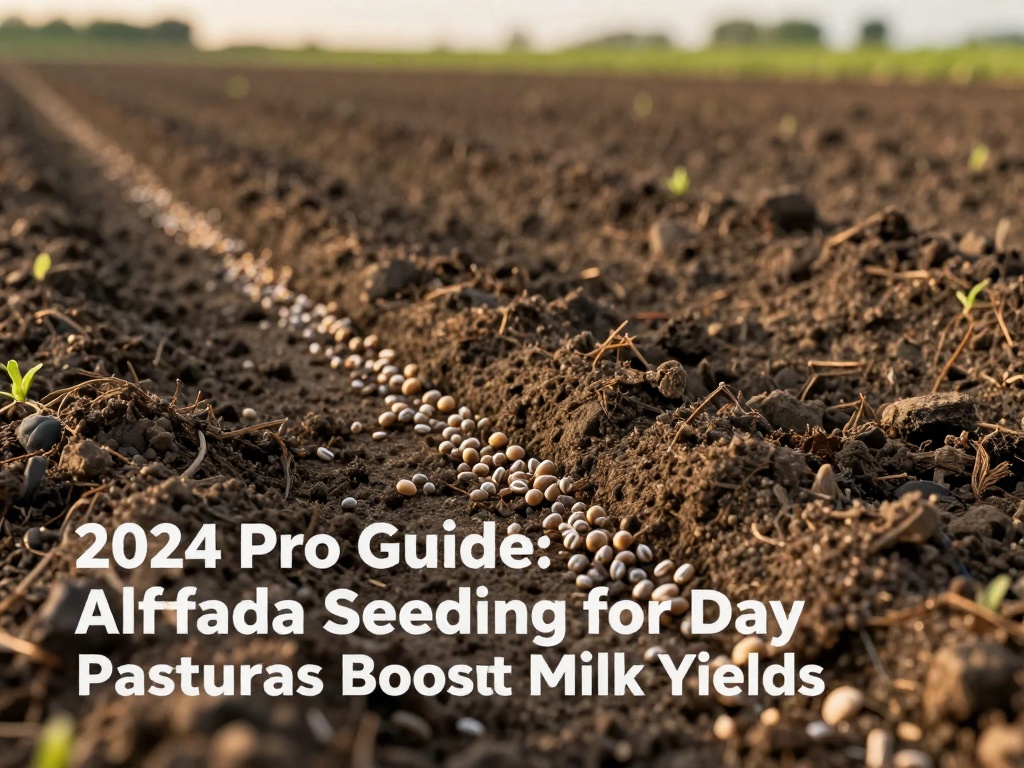
Alfalfa seeds are very small, requiring a seeding depth of just ¼ to ½ inch to germinate successfully. Planting too deep is the top cause of seedling failure, per the USDA’s Natural Resources Conservation Service (NRCS). For pure alfalfa stands, use a seeding rate of 15-20 pounds per acre. If mixing alfalfa with a grass companion like orchardgrass or tall fescue, reduce the alfalfa rate to 12-15 pounds per acre to avoid overcrowding.
Add a Companion Grass to Reduce Bloat Risk
Bloat is a life-threatening risk for dairy cows grazing pure alfalfa stands, leading to lost production and even cow mortality. Seeding alfalfa with a grass companion reduces bloat risk by 70%, according to Penn State Extension, by slowing forage digestion in the cow’s rumen. A 70:30 alfalfa-to-grass ratio is ideal for dairy pastures, balancing high protein intake with safe grazing conditions.
Post-Seeding Weed and Grazing Management
Young alfalfa seedlings cannot compete with aggressive weeds like pigweed or thistle, which can smother stands before they mature. Use an alfalfa-approved pre-emergent herbicide at planting, or a post-emergent option once seedlings reach the 3-trifoliate leaf stage. NRCS recommends avoiding overgrazing new stands for the first 12 months to allow alfalfa roots to grow deep enough to support future grazing cycles.
Frequently Asked Questions
How long does an alfalfa pasture stand last for dairy grazing?
A properly established and managed alfalfa stand can last 5-7 years, with annual soil testing, weed control, and rotational grazing supporting long-term productivity. Stands that are overgrazed or planted in unsuitable soil may only last 2-3 years before requiring reseeding.
Can I seed alfalfa into an existing grass pasture?
Yes, no-till seeding alfalfa into an existing grass pasture is a cost-effective way to upgrade forage quality. Mow the existing pasture short before seeding, use a no-till drill to place alfalfa seeds at the correct depth, and apply phosphorus to support healthy seedling root growth.
How much does alfalfa seeding cost per acre for dairy pastures?
As of 2024, average alfalfa seeding costs range from $150-$300 per acre, including seed, soil amendments, and planting. USDA farm economic data shows this cost is recouped within 12-18 months through reduced feed costs and higher milk sales, making it a high-ROI farm investment.
No comments