
2024 Guide to Corn Side-Dress Nitrogen Application Timing for 15% Higher Yields
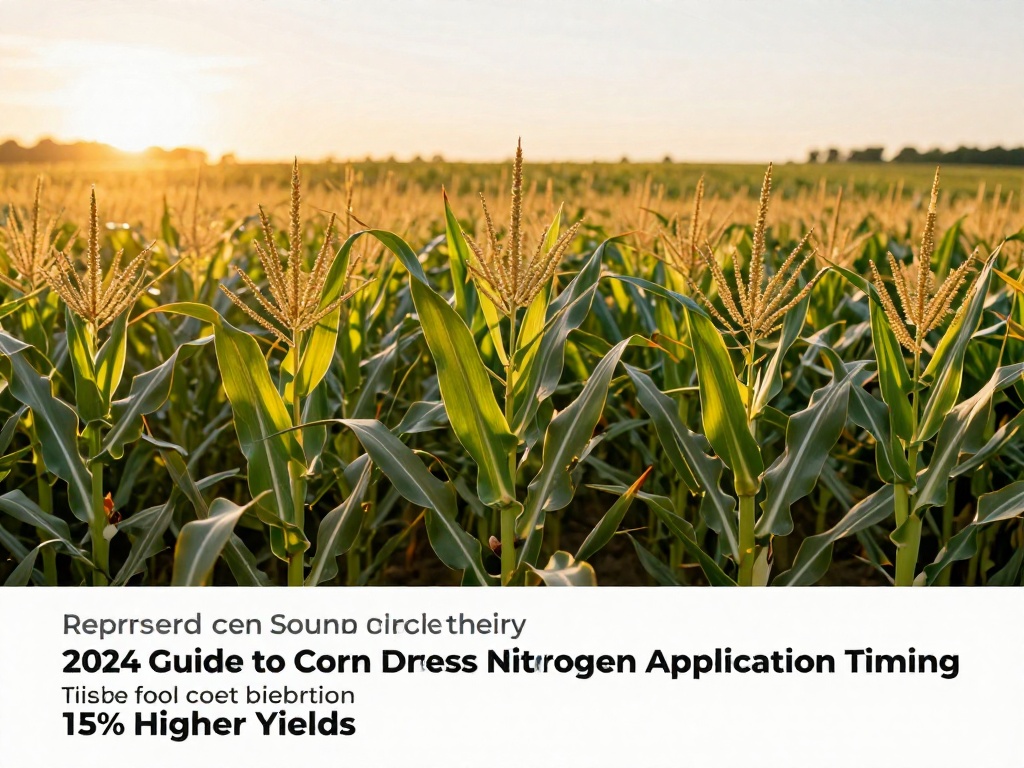
2024 Guide to Corn Side-Dress Nitrogen Application Timing for 15% Higher Yields
Corn side-dress nitrogen application timing is one of the most impactful management decisions for corn farmers, per 2023 data from the University of Illinois Extension. Misaligned timing can lead to up to 40% of applied nitrogen leaching away, wasting input costs and cutting potential yields by as much as 20 bushels per acre. Proper timing ensures corn accesses nitrogen when it needs it most, supporting critical growth stages that drive grain fill and overall output.
Core Corn Growth Stages That Dictate Side-Dress Timing
V4 to V6 Growth Stage: The Primary Window for Most Regions
The V4 to V6 corn growth stage, when plants develop 4 to 6 visible leaf collars, is the most widely recommended window for side-dress nitrogen applications across the U.S. Corn Belt. University of Minnesota research found that applying nitrogen at V5 reduces leaching risk by 32% compared to fall pre-plant applications, while still meeting early corn nitrogen demands. Corn uses less than 15% of its total seasonal nitrogen before the V6 stage, so late spring side-dressing aligns supply with rising demand.
V8 to V10: The Late Side-Dress Limit for Maximum Yields
Farmers dealing with wet springs that delay field work can apply side-dress nitrogen as late as the V8 growth stage without major yield losses, though applications after V6 carry slightly higher risk. Nitrogen applied after V10, when corn enters its rapid reproductive growth phase, fails to support tasseling and silking stages that require 60% of the crop’s total seasonal nitrogen. A 2024 Iowa State University trial found that side-dressing after V10 cut yields by an average of 12 bushels per acre compared to V5 applications.
Regional Adjustments to Side-Dress Nitrogen Timing
Northern Corn Belt: Wait for Soil Temperatures Above 50°F
Farmers in Minnesota, Wisconsin, and Michigan should delay side-dress applications until soil temperatures at the 4-inch depth rise above 50°F, even if corn has reached the V4 stage. Cold soils slow nitrogen mineralization and uptake, so applying too early in northern regions increases the risk of nitrogen loss during late spring rains. Ohio State University Extension recommends pairing this timing rule with a nitrification inhibitor to cut loss risk by an additional 18% in cold, wet northern soils.
Southern Corn Belt: Prioritize Early Side-Dressing to Avoid Summer Rains
Farmers in Texas, Oklahoma, and Arkansas should aim to apply side-dress nitrogen by the V4 stage to avoid the heavy summer thunderstorms common in the Southern Corn Belt that can wash away unabsorbed nitrogen. Early summer rainfall events in the region can leach up to 50% of surface-applied nitrogen if applied less than 7 days before a major storm. Side-dressing early and injecting nitrogen 2 to 3 inches below the soil surface further reduces loss risk in southern regions.
Additional Tips to Optimize Side-Dress Nitrogen Performance
Always inject side-dress nitrogen rather than broadcasting it to place nutrients within the root zone and reduce volatilization risk. Pair nitrogen applications with an annual soil test to confirm current nutrient levels, so you only apply the exact amount of nitrogen your crop needs, cutting input costs by up to 20% for many small to mid-sized farms. Use variable rate technology to adjust application rates across fields with variable soil health and drainage, ensuring every part of your field gets the right amount of nutrients.
Frequently Asked Questions
Can I apply side-dress nitrogen to corn that has grown past the V6 stage?
While the optimal window closes at V6, you can apply nitrogen to corn up to the V8 stage using high-clearance application equipment. Yield losses are minimal if you apply before V8, but avoid driving over mature corn to prevent stand damage that would cut yields further.
Is side-dress nitrogen more profitable than pre-plant nitrogen for corn?
Most university trials show side-dress nitrogen applications outperform fall pre-plant applications by 7 to 15 bushels per acre, thanks to reduced nitrogen loss. Side-dressing aligns nutrient supply with crop demand, making it a more sustainable and profitable choice for 90% of corn operations in the U.S.
What is the average financial cost of mistiming corn side-dress nitrogen applications?
Mistimed applications can cost farmers an average of $80 per acre between lost input costs and reduced yield revenue, per 2024 USDA data. That adds up to $80,000 in losses for a 1,000-acre corn farm, making proper timing one of the highest-return management decisions a farmer can implement.
No comments