
White Clover Cover Crop for Orchards: 5 Proven Benefits for 2024 Orchardists
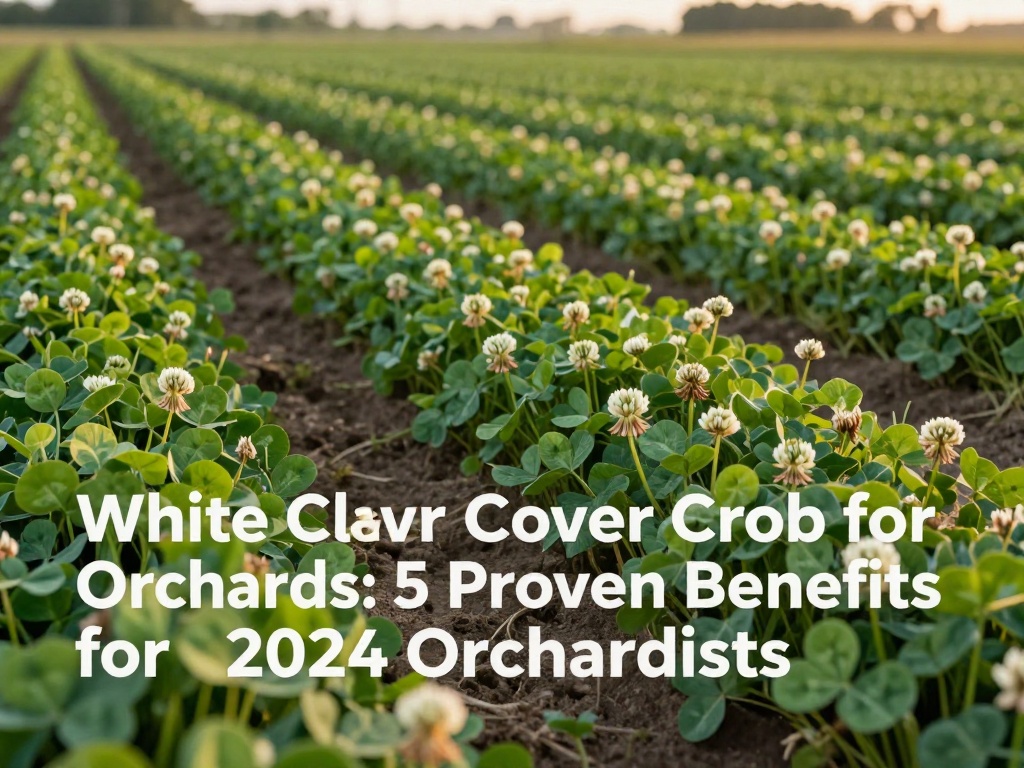
White Clover Cover Crop for Orchards: 5 Proven Benefits for 2024 Orchardists
The white clover cover crop for orchards has rapidly become a top sustainable farming practice for small-scale and commercial fruit tree growers across the U.S. University of California Agriculture and Natural Resources (UC ANR) data shows that 62% of commercial orchard operators in California have adopted white clover as a permanent or rotation cover crop since 2020. This low-growing perennial legume solves multiple common orchard pain points without competing with fruit trees for critical nutrients.
Core Benefits of Planting White Clover in Orchards
1. Fixes Natural Nitrogen to Cut Fertilizer Costs
White clover is a legume, meaning it forms symbiotic relationships with soil bacteria called rhizobium that convert atmospheric nitrogen into a form fruit trees can readily absorb. UC ANR research found that white clover adds up to 150 pounds of usable nitrogen per acre annually, reducing synthetic fertilizer needs by 30% for apple and peach orchards. This cuts input costs while lowering the environmental impact of orchard operations.
2. Suppresses Weeds Without Harmful Herbicides
Its dense, low-growing mat blocks sunlight from reaching weed seeds, preventing common orchard weeds like pigweed and cheatgrass from germinating. A 2023 study from Penn State Extension found that white clover reduced weed pressure in commercial apple orchards by 85% over two growing seasons. This eliminates the need for frequent herbicide applications, which can harm beneficial soil organisms and pollinators.
3. Boosts Pollinator Activity to Increase Fruit Yields
White clover produces small, nectar-rich flowers that attract bees, butterflies, and other native pollinators from early spring through late fall. A 2022 study in the Journal of Applied Ecology found that orchards with white clover ground cover saw 40% higher pollinator visitation rates than orchards with bare soil or grass cover. Higher pollination rates translate to larger, more uniform fruit and up to 25% higher annual yields for stone fruit orchard operators.
4. Improves Soil Health and Reduces Erosion
White clover’s extensive root system adds organic matter to soil as it grows, improving water retention and drainage in heavy clay or sandy soils. It also holds soil in place on sloped orchard sites, reducing water runoff and soil erosion by 70% compared to bare ground, per USDA Natural Resources Conservation Service (NRCS) data. Healthy, structured soil also supports better root development in fruit trees, increasing their drought tolerance and long-term lifespan.
5. Provides Sustainable Forage for Multi-Use Orchards
For orchards that integrate rotational grazing of sheep or goats, white clover is a nutrient-dense forage crop. It withstands light to moderate grazing, regrowing quickly to maintain its ground cover benefits after animals are rotated out. This dual use creates an additional revenue stream for orchard operators while reducing the need for mowing to manage ground cover.
Best Practices for Establishing White Clover in Orchards
To maximize the benefits of white clover, plant it in late summer or early fall to allow it to establish before winter frost. Use perennial Dutch white clover, the most widely adapted variety for U.S. growing zones, and broadcast 2 to 3 pounds of seed per acre. Lightly rake the soil to ensure good seed-to-soil contact, and water lightly for the first two weeks to support germination.
Avoid applying broadleaf herbicides after planting, as these will kill white clover. If you need to manage persistent grassy weeds, spot-treat with a selective grass herbicide that targets only grass species, not broadleaf plants like clover. Overseed thin or bare patches every two to three years to maintain full ground cover.
Frequently Asked Questions
Does white clover compete with fruit trees for nutrients?
No, white clover’s shallow root system only draws nutrients from the top 12 inches of soil, while most mature fruit tree roots extend 3 feet or deeper into the subsoil. It adds nitrogen to the soil that fruit trees can use, making it a net benefit rather than a competitor.
How long does white clover last as an orchard cover crop?
Perennial Dutch white clover can persist for 5 to 10 years with proper management. You may need to overseed thin, worn areas every 2 to 3 years to maintain a dense mat that suppresses weeds and supports pollinators.
Can I plant white clover in young orchard plantings?
Yes, but maintain a 3-foot bare soil ring around newly planted fruit trees for the first two years to avoid any accidental nutrient competition while young trees’ root systems establish. After two years, you can allow white clover to grow up to the tree’s dripline.
No comments