
Radish Cover Crop for Compacted Soil: 5 Proven Benefits
Radish Cover Crop for Compacted Soil: 5 Proven Benefits
Compacted soil is a pervasive issue for small-scale gardeners and commercial farmers alike, restricting root growth, reducing water infiltration, and limiting crop yields. Radish cover crop for compacted soil offers a natural, low-cost solution to break up hardpan layers without the environmental damage of conventional tillage. This hardy cover crop’s deep taproot penetrates even the densest soil, restoring structure and long-term soil health.
How Radish Cover Crop Repairs Compacted Soil
Deep Taproot Penetration
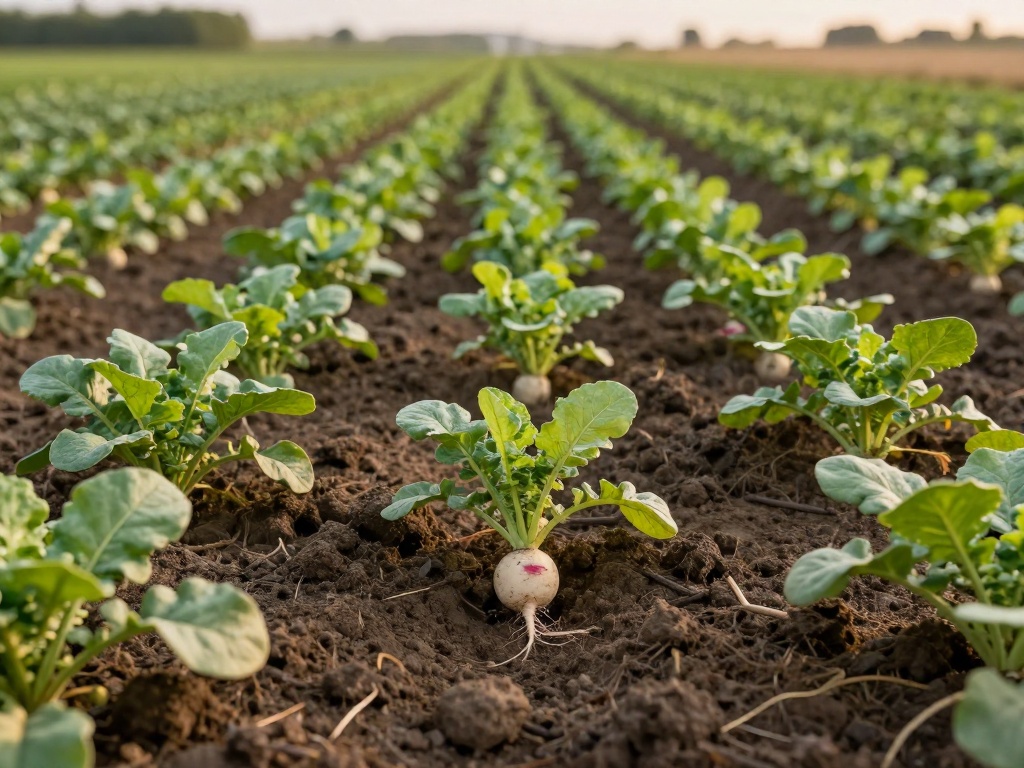
Most radish varieties grown as cover crops develop thick, 3- to 6-foot taproots, according to the University of Illinois Extension. These taproots grow straight down through compacted layers, creating natural channels for water, air, and future crop roots to follow. Unlike shallow cover crops, radishes can reach hardpan layers that standard tillage equipment cannot access.
Breaking Up Hardpan Layers
As the radish taproot expands and matures, it pushes apart compacted soil particles, a process called “biological tillage.” When the radish plants terminate and decompose, these channels remain intact, creating a loose, friable soil structure that supports healthy root growth for subsequent crops. The United States Department of Agriculture (USDA) reports that biological tillage with radish cover crops can reduce soil bulk density by up to 15% in as little as one growing season.
Key Additional Benefits of Radish Cover Crop for Compacted Soil
Improved Drainage
The channels created by decomposing radish taproots act as natural drainage tiles, redirecting excess water away from plant roots and reducing the risk of root rot. This is especially critical for compacted soil, which already traps water and limits airflow.
Increased Organic Matter
When radish cover crops are tilled under or allowed to decompose in place, they add 2,000 to 4,000 pounds of organic matter per acre to the soil, per the Natural Resources Conservation Service (NRCS). This organic matter feeds soil microbes, further improving soil structure and nutrient availability.
Higher Crop Yields
Farmers who use radish cover crops for compacted soil report a 10-20% increase in subsequent crop yields, according to a 2023 study published in the Journal of Sustainable Agriculture. The improved soil structure and nutrient availability directly support healthier, more productive plants.
Natural Weed Suppression
Radish cover crops grow quickly, forming a dense canopy that shades out weed seedlings before they can establish roots. This reduces the need for synthetic herbicides and manual weeding, making it a sustainable option for small and large farms alike.
How to Plant Radish Cover Crop for Compacted Soil
Timing is critical when planting radish cover crops for compacted soil. Most gardeners and farmers plant radish cover crops 4 to 6 weeks before the first expected fall frost, allowing the plants to establish a strong taproot before winter. For spring planting, sow seeds 2 to 3 weeks before the last average frost date.
Seeding rates range from 10 to 15 pounds per acre for broadcast seeding, or 1 to 2 pounds per 1,000 square feet for home gardens. Plant seeds ½ to 1 inch deep, and lightly rake soil over the top to ensure good seed-to-soil contact. No-till planting is ideal, as it avoids further compacting the soil.
Terminate radish cover crops 2 to 3 weeks before planting subsequent crops, either by mowing and tilling under or by using a roller-crimper for no-till systems. Allow the plant material to decompose for 1 to 2 weeks before seeding or transplanting.
Best Radish Varieties for Compacted Soil
Not all radish varieties are equally effective at breaking up compacted soil. Forage radish (also called tillage radish) is the most widely recommended variety, thanks to its thick, deep taproot that can reach up to 6 feet deep. Other effective varieties include Japanese minowase radish and oilseed radish, both of which have strong taproots and rapid growth rates.
Frequently Asked Questions About Radish Cover Crop for Compacted Soil
What type of radish cover crop is best for compacted soil?
Forage radish (tillage radish) is the top choice, as its thick, deep taproot is specifically bred to penetrate and break up compacted soil layers. Oilseed and minowase radishes are also effective options.
When should you plant radish cover crop for compacted soil?
Plant radish cover crops 4 to 6 weeks before your area’s first fall frost for optimal taproot growth, or 2 to 3 weeks before the last spring frost for a spring cover crop before summer planting.
How long does it take for radish cover crop to break up compacted soil?
Most gardeners and farmers see visible improvements in soil structure within one growing season, with full hardpan breakdown and improved soil porosity within 2 to 3 years of consistent planting.
Can you eat radishes grown from a cover crop plot?
Yes, forage radishes are edible, though they are smaller and spicier than commercial garden radishes. You can harvest them 60 to 70 days after planting, or leave them in the ground as a cover crop.
No comments