
2024 Essential Guide: Drip Irrigation Scheduling for Raised Bed Tomatoes
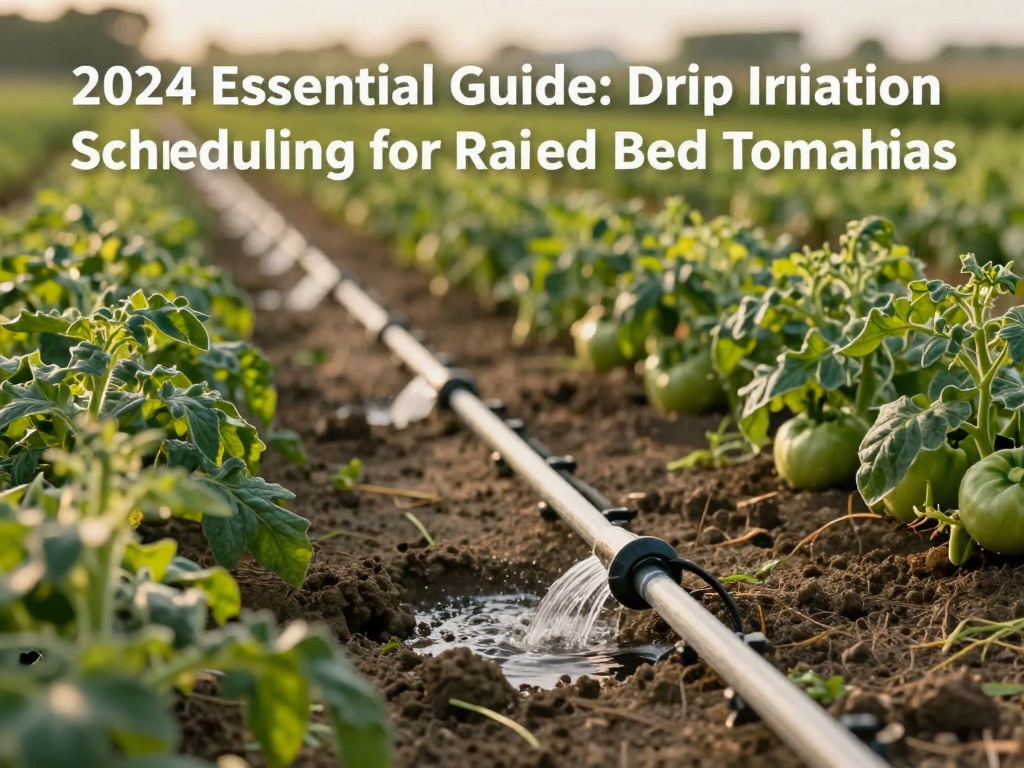
2024 Essential Guide: Drip Irrigation Scheduling for Raised Bed Tomatoes
Drip irrigation scheduling for raised bed tomatoes is one of the most impactful ways to grow healthy, high-yielding crops while conserving water. Unlike in-ground gardens, raised beds drain faster and warm more quickly, so generic irrigation schedules often lead to underwatering or overwatering. A tailored schedule aligns with your tomatoes’ unique needs to prevent root rot, blossom end rot, and preventable yield loss.
Why Custom Scheduling Makes a Critical Difference
Raised beds typically feature amended, loose soil that does not hold water the same way compacted native soil does. The University of California’s Agriculture and Natural Resources (UC ANR) department notes that raised beds can lose 25% more moisture to drainage and evaporation than in-ground plots, making consistent, scheduled watering non-negotiable. Drip irrigation delivers water directly to root zones, cutting evaporation by up to 70% compared to sprinklers, but only if you run the system on a schedule that matches plant demand.
Core Factors That Shape Your Custom Schedule
Soil Composition in Your Raised Beds
Most raised bed gardeners use a mix of compost, peat moss, and vermiculite to support root growth. Sandy-loam mixes drain the fastest, requiring more frequent watering than loam-heavy blends that retain moisture. Test your soil’s moisture level by sticking a finger 2 inches deep; if it’s dry, it’s time to water, regardless of your base schedule.
Tomato Growth Stage
Young tomato transplants have shallow root systems, so they need small, frequent waterings to establish. As plants enter the fruiting stage, their roots expand, and they require larger, less frequent waterings to support plump, healthy fruit. Irregular watering during fruiting is the top cause of blossom end rot, a common calcium deficiency issue in tomatoes.
Local Climate and Weekly Weather
Temperatures above 85°F (29°C) and low humidity speed up evaporation, forcing you to add 1-2 extra watering days per week. Periods of heavy rain require you to pause your schedule entirely to avoid waterlogged roots. Invest in a low-cost rain gauge to track natural precipitation and adjust your schedule accordingly.
Proven Sample Drip Irrigation Schedule
This schedule, tested by Michigan State University Extension for midwestern growing zones, works for most raised bed tomato setups with 2-gallon-per-hour (GPH) drip emitters spaced 12 inches apart along your line.
- Transplant stage (first 2 weeks post-planting): Run the system for 15 minutes, 3 times per week, delivering 0.5 inches of water total weekly
- Vegetative growth stage (3 weeks post-transplant to first flower set): Run for 20 minutes, 3 times per week, for a total of 1 inch of water weekly
- Fruiting stage (first tomato set to harvest): Run for 30 minutes, 3 times per week, totaling 1.5-2 inches of water weekly
Adjust this schedule by 20% if you live in a hot, arid climate, or cut it by 20% if you’re in a cool, humid coastal region to match local conditions.
Common Mistakes to Avoid
One of the costliest mistakes is watering at night, which leaves any accidental surface moisture on foliage damp and increases the risk of fungal blight. Always run your drip system between 4 a.m. and 9 a.m. to let any stray moisture evaporate midday. Another mistake is skipping affordable soil moisture sensors; these $20 devices can automatically pause your system if soil moisture is already sufficient, saving you hundreds of gallons of water annually.
Frequently Asked Questions
How often should I water my raised bed tomatoes with drip irrigation in peak summer?
During summer heat spikes of 90°F (32°C) or higher, run your drip system 4 times per week for 30 minutes each session to meet the 2 inches of weekly water fruiting tomatoes need. Add a 2-inch layer of straw mulch to retain moisture and cut evaporation by an additional 30%.
Can overwatering with drip irrigation harm my raised bed tomatoes?
Yes, overwatering is the top cause of root rot in raised bed tomatoes, even with precise drip irrigation. Loose raised bed soil can become oversaturated if you water too frequently, preventing roots from absorbing oxygen and critical nutrients. Always check soil moisture before running your system.
Is a timer necessary for a drip irrigation system for raised bed tomatoes?
A timer is highly recommended to maintain a consistent schedule, especially if you travel or have a busy routine. Timers prevent missed waterings during hot spells and eliminate the risk of overwatering by shutting off automatically, leading to more reliable yields and lower monthly water bills.
No comments