
Irrigation Scheduling for Pecan Orchards: 2024 Guide to Boost Yields
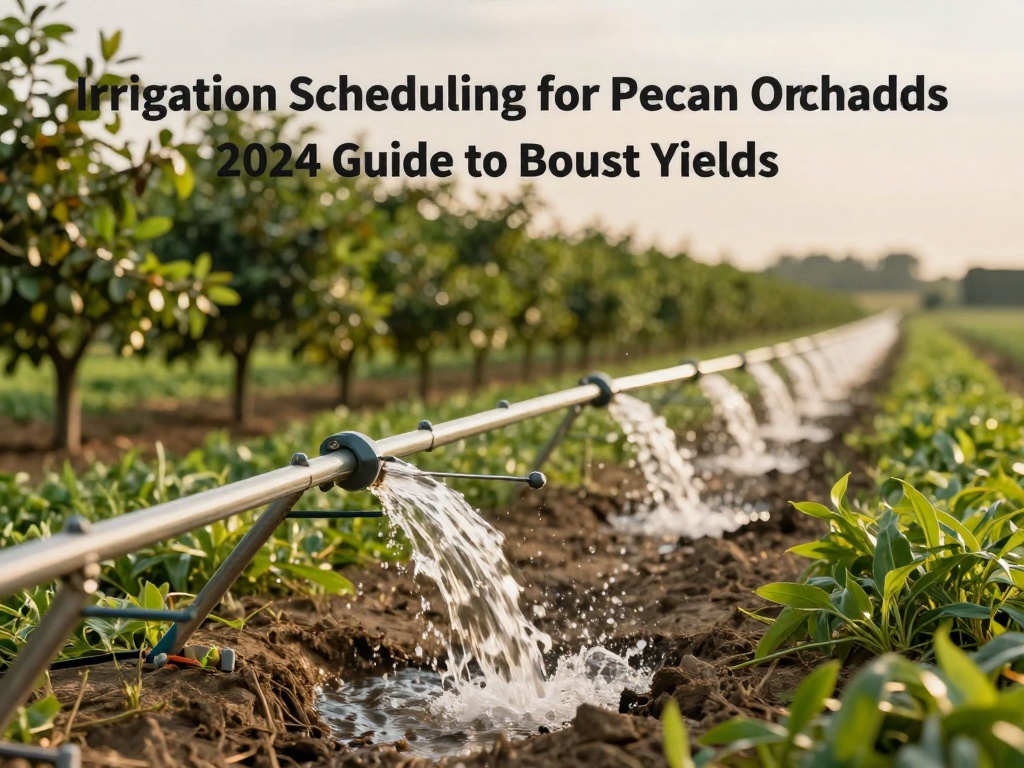
Irrigation Scheduling for Pecan Orchards: 2024 Guide to Boost Yields
Irrigation scheduling for pecan orchards is one of the most impactful management practices to support long-term tree health and profitable yields, according to 2023 USDA Agricultural Research Service (ARS) data. Pecan trees require consistent, stage-specific water access to develop full-sized, high-quality nuts, and over- or under-watering can cut yields by up to 35% in mature orchards. Proper scheduling aligns water application with each tree’s growth stage, local climate, and soil type to eliminate waste and maximize returns.
Core Growth Stages That Drive Pecan Orchard Irrigation Needs
Bud Break to Shell Hardening (April–June)
During this early growth window, pecan trees rely on consistent soil moisture to support new leaf and shoot development, as well as initial nut set. The USDA ARS recommends maintaining 50-70% available soil water (ASW) in the top 4 feet of soil throughout this period to prevent premature nut drop. Young, newly planted orchards require even more frequent checks, as their shallow root systems cannot access deep soil moisture reserves.
Shell Hardening to Kernel Fill (July–September)
This is the most water-critical stage for pecan trees, as kernel development drives 60% of the season’s total water demand. Maintaining 60-75% ASW during this window directly correlates with larger kernel size and higher percentages of premium-grade nuts. Extended dry spells during kernel fill can lead to shriveled nuts that fail to meet industry grading standards.
Pre-Harvest to Dormancy (October–March)
Once nuts reach maturity 2 weeks before harvest, reduce irrigation to dry the orchard floor and make mechanical harvesting easier. After harvest, apply one deep irrigation to replenish soil reserves before trees enter dormancy. This late-season watering supports root health through winter and prepares trees for the following spring’s growth flush.
Proven Tools to Refine Your Irrigation Scheduling
Soil Moisture Sensors
Soil moisture sensors are the gold standard for data-driven irrigation scheduling for pecan orchards, per University of Georgia Extension recommendations. These sensors measure ASW in real time at multiple root zone depths, eliminating guesswork from visual tree assessments. A 2023 UGA study found that orchards using soil sensors reduced water use by 22% while increasing yields by 18% compared to calendar-based scheduling.
Evapotranspiration (ET) Weather Stations
Local weather stations that track ET rates calculate how much water is lost to evaporation and plant transpiration, letting growers replace only the water trees actually used each week. Many modern irrigation systems can auto-adjust application rates based on real-time ET data, cutting labor requirements and excess water use by up to 20% for mid-sized orchards.
Satellite Canopy Monitoring
For large commercial orchards, satellite imagery identifies under-watered tree blocks before visible stress appears. Tools like NASA’s CropX platform integrate canopy temperature and vegetation index data to flag irrigation discrepancies across large properties. This allows growers to address issues in small sections rather than applying uniform water to the entire orchard.
Common Mistakes to Avoid
Relying on a fixed calendar schedule is the costliest mistake most new pecan growers make, as it fails to account for annual variations in rainfall, temperature, or tree age. Over-watering in early spring can also lead to root rot in heavy clay soils, while under-watering during kernel fill leads to irreversible nut quality losses. Always tailor your schedule to your orchard’s unique soil, tree age, and local climate conditions.
Frequently Asked Questions
How often should I irrigate my mature pecan orchard during kernel fill?
Most mature pecan orchards require 1-2 inches of water per week during the July to September kernel fill stage, whether from rainfall or irrigation. Use soil moisture sensors to confirm levels stay within the recommended 60-75% available soil water range to avoid over- or under-watering.
Can rainwater harvesting support irrigation scheduling for pecan orchards?
Yes, rainwater harvesting is a sustainable, cost-effective way to support consistent pecan orchard irrigation. Size storage tanks to capture enough rainwater to cover 2-3 weeks of peak water demand to reduce groundwater reliance and maintain scheduling during droughts.
How does soil type impact my pecan orchard irrigation schedule?
Sandy soils drain quickly and require frequent, light irrigation, while clay soils hold moisture longer and risk root rot if over-watered. Loam soils, the ideal for pecan trees, require irrigation every 7-10 days during peak demand, making scheduling far easier to maintain for consistent yields.
No comments