
Rhubarb Crown Dividing for Extended Perennial Yields: 2026 How-To Guide
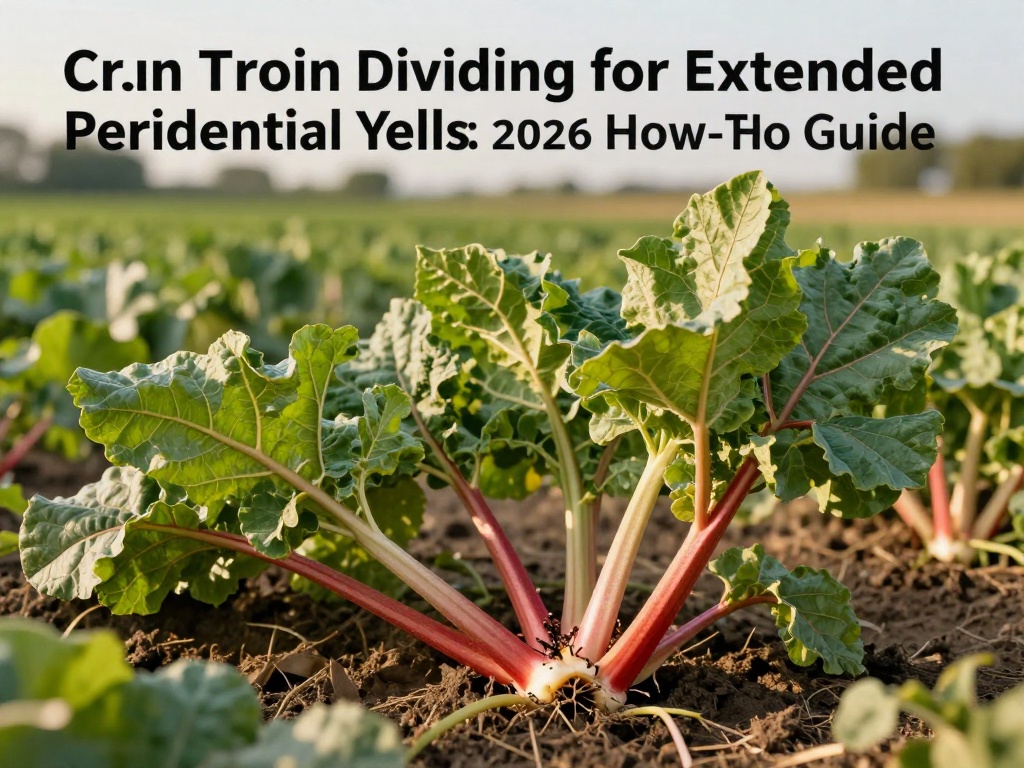
Rhubarb Crown Dividing for Extended Perennial Yields: 2026 How-To Guide
Rhubarb is a low-maintenance perennial vegetable that can produce harvests for 10+ years, but overcrowded crowns slow growth and reduce output. Rhubarb crown dividing for extended perennial yields is a simple, low-cost practice that revives mature plants and creates new starts to expand your plot. University of Minnesota Extension research confirms that dividing rhubarb every 5-6 years boosts annual stalk yields by up to 40% compared to undivided plants.
Why Divide Rhubarb Crowns?
Reverse Overcrowding Decline
Mature rhubarb crowns expand outward each year, leaving the center of the root mass weak and unproductive. Undivided crowns develop tangled roots that can’t access enough water and nutrients, leading to thin, small stalks prone to pest and disease damage. Dividing splits the overgrown mass into healthy, individual plants with enough space to thrive.
Expand Your Plot For Free
Each divided crown can grow into a full, productive rhubarb plant, so you can expand your garden’s rhubarb patch without buying expensive new nursery starts. This is ideal for small-scale farmers and home gardeners looking to scale their perennial vegetable production at low cost. You can also share extra crowns with fellow gardeners to build community plant swap networks.
Extend Your Plant’s Lifespan
Dividing resets the maturity of the rhubarb crown, extending the total productive lifespan of your original plant stock by another 5-6 years. Instead of replacing an unproductive old crown, you can breathe new life into the same genetic stock adapted to your local climate and soil conditions. This is a key sustainable practice that reduces waste and supports long-term garden resilience.
When to Divide Rhubarb Crowns For Best Results
Timing is critical to avoid shocking your rhubarb plants and ensure successful establishment of divided crowns. The ideal window is late winter or early spring, before new growth emerges from the crown, or in early fall after the plant has gone fully dormant. Avoid dividing in summer when heat and active growth put excess stress on the root system.
Oregon State University Extension recommends spring dividing for cold climates, as fall divisions may not establish enough root growth to survive harsh, below-freezing winters. For USDA zones 8 and above, fall dividing works well, as mild winter temperatures support steady root growth through the cool season.
Step-by-Step Guide to Dividing Rhubarb Crowns
Prep Your Tools and Planting Sites
First, gather sharp, sanitized spades, pruning shears, and a bucket of water to keep roots moist during transplant. Prepare new planting sites ahead of time, choosing a spot with full sun and well-draining soil amended with 3 inches of aged compost. Rhubarb needs at least 3 feet of space between plants to avoid re-overcrowding within 5 years.
Dig Up the Mature Crown
Carefully dig 12 inches around the base of the mature rhubarb plant to avoid cutting the outer root system. Lift the entire crown out of the ground, and brush off excess soil to clearly see the growth buds (also called eyes) on the top of the root mass. Each division needs at least 1-2 large, healthy buds to grow into a productive plant.
Split the Crown Correctly
Use your sharp spade or a clean knife to cut the root mass into sections, ensuring each section has a minimum of 1-2 buds and a robust root system. Discard the old, woody center of the original crown, as it will not produce well even after transplant. This step is where most new gardeners make mistakes, so take time to identify firm, plump buds before cutting.
Transplant and Nurture New Divisions
Plant each new division at the same depth it grew in the original site, with the buds sitting just below the soil line. Water each transplant deeply to settle the soil around the roots, and add a 2-inch layer of straw mulch to retain moisture and suppress weeds. Avoid harvesting any stalks from the new divisions for their first full growing season to let them establish strong root systems.
Frequently Asked Questions
How often should I divide my rhubarb crowns?
You should divide rhubarb crowns every 5-6 years to maintain consistent high yields. Clear signs your crown needs dividing include thin stalks, fewer overall stalks each season, or a hollowed-out dead center of the plant, which signals the core is no longer productive.
Can I divide rhubarb in the summer if I miss the spring window?
While it’s not ideal, you can divide rhubarb in early summer if you provide ample water and partial shade for the transplants to recover. Iowa State University research notes that summer divisions have a 30% lower success rate than spring or fall divisions, so it is always best to stick to the recommended dormant-season timing.
Will dividing my rhubarb reduce next year’s harvest?
If you divide in early spring before new growth emerges, you can still harvest a small number of stalks from the original healthy parent crown the same year. New transplants should not be harvested for their first full season to support strong root development. You will see a 30-40% yield boost within 12 months of dividing, so any temporary small dip in harvest is quickly offset by long-term gains.
No comments