
Pasture Frost Seeding for Clover Establishment: 2024 Proven Farmer’s Guide
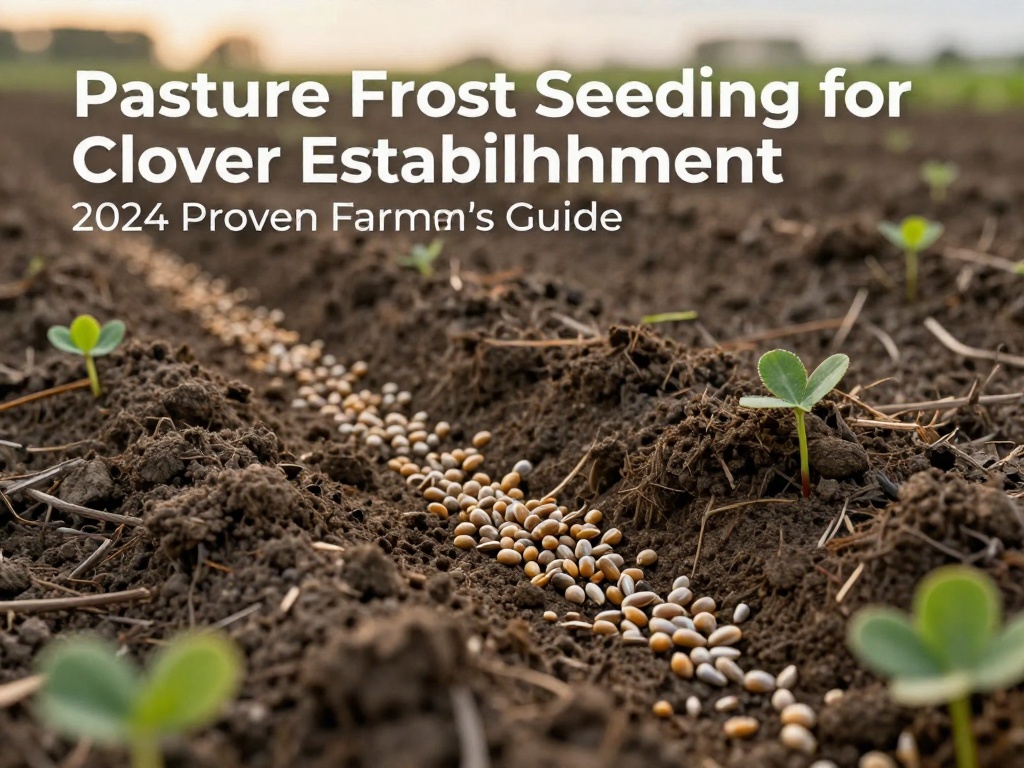
Pasture Frost Seeding for Clover Establishment: 2024 Proven Farmer’s Guide
Pasture frost seeding for clover establishment is a low-cost, high-success technique used by livestock and forage farmers across temperate regions to boost pasture productivity. The process leverages natural freeze-thaw cycles to work clover seed into the soil without tillage, eliminating expensive equipment costs. According to the University of Wisconsin Extension, frost-seeded clover establishes 70-80% better than no-till broadcast seeding in non-irrigated pastures, making it a top choice for small and mid-sized operations.
Why Choose Clover for Pasture Frost Seeding?
Boosts Forage Nutrition for Livestock
Clover is a high-protein forage that adds 16-18% crude protein to pasture mixes, compared to just 8-10% for pure grass pastures. This reduces the need for costly supplemental protein feeds, which can save livestock farmers hundreds of dollars annually. Clover is also highly palatable, encouraging consistent grazing and reducing unused pasture waste.
Improves Long-Term Soil Health
As a legume, clover fixes atmospheric nitrogen, adding 50-100 pounds of free nitrogen to the soil each year, per Ohio State University Extension. This feeds companion grasses like fescue and orchardgrass, cutting reliance on synthetic nitrogen fertilizers. Clover’s deep taproot also breaks up compacted soil, improving water infiltration and reducing runoff by 30% in university-tested pastures.
Cuts Input Costs Drastically
Frost seeding requires no tillage, no specialized planting equipment, and just 8-10 pounds of clover seed per acre, compared to 15 pounds for conventional drill seeding. Most farmers spend less than $30 per acre to frost seed clover, a fraction of the $150+ average cost of conventional clover establishment. The low barrier to entry makes the practice accessible to new and part-time farmers.
Step-by-Step Process for Successful Frost Seeding
Time Your Seeding Correctly
The ideal window for frost seeding is late winter, 2-4 weeks before your area’s last expected spring frost. Freeze-thaw cycles, which create small cracks in the soil that pull seed underground, are most consistent during this period in temperate zones. Avoid seeding on bare, unfrozen soil, as seed will not be worked into the ground and is likely to be eaten by birds or washed away in spring rains.
Prepare Your Pasture Pre-Seeding
4-6 weeks before seeding, graze your pasture down to 3-4 inches to remove excess grass residue that would block seed from reaching the soil. If your pasture has a thick thatch layer, a single light harrowing can improve seed-to-soil contact by 40%, per Penn State Extension. Test your soil pH to ensure it falls between 6.0 and 7.0, the ideal range for consistent clover germination.
Broadcast Seed at the Recommended Rate
Use a spin spreader to broadcast 8 pounds of red clover or 10 pounds of white clover seed per acre, adjusting for your pasture’s specific conditions. Mix small amounts of granular fertilizer with your seed to help distribute it evenly across the entire pasture. For permanent grazing pastures, white clover is preferred, while red clover works best for hay rotation pastures.
Manage Post-Seeding Grazing
Once clover reaches 6 inches in height, usually 6-8 weeks after spring green-up, you can begin light rotational grazing. Avoid overgrazing clover to less than 3 inches, as this will prevent it from establishing a strong, long-lasting root system. When managed correctly, frost-seeded clover will persist in pastures for 3-5 years, delivering annual returns on your initial seed investment.
Frequently Asked Questions
What types of clover work best for frost seeding?
Red clover and white clover are the top choices for frost seeding. Red clover grows quickly, produces high yields, and persists for 2-3 years, making it ideal for hay or rotation pastures. White clover is low-growing, persistent for 4-5 years, and perfect for permanent grazing pastures. Alsike clover is a lesser-used option for wet, low-pH soils that don’t support other clover varieties.
Why would frost seeding fail to establish clover?
Frost seeding has a high baseline success rate, but failures usually stem from three common mistakes: poor timing, insufficient seed-to-soil contact, or spring drought. Seeding too late in spring, when freeze-thaw cycles stop, leaves seed on the soil surface unable to germinate. Excess thatch or tall grass residue that blocks seed from reaching soil is another leading cause of low establishment rates.
Is frost seeding only suitable for large commercial farms?
No, frost seeding is ideal for small, hobby, and mid-sized farms, as it requires minimal equipment and investment. Small-scale farmers can even broadcast clover seed by hand across small pastures, eliminating the need for a spin spreader entirely. The low cost and low labor requirements make it accessible to any farmer looking to improve their pasture’s productivity and health.
No comments