
Cowpea Cover Cropping for Sandy Soils: 2024 Guide to Boost Soil Health
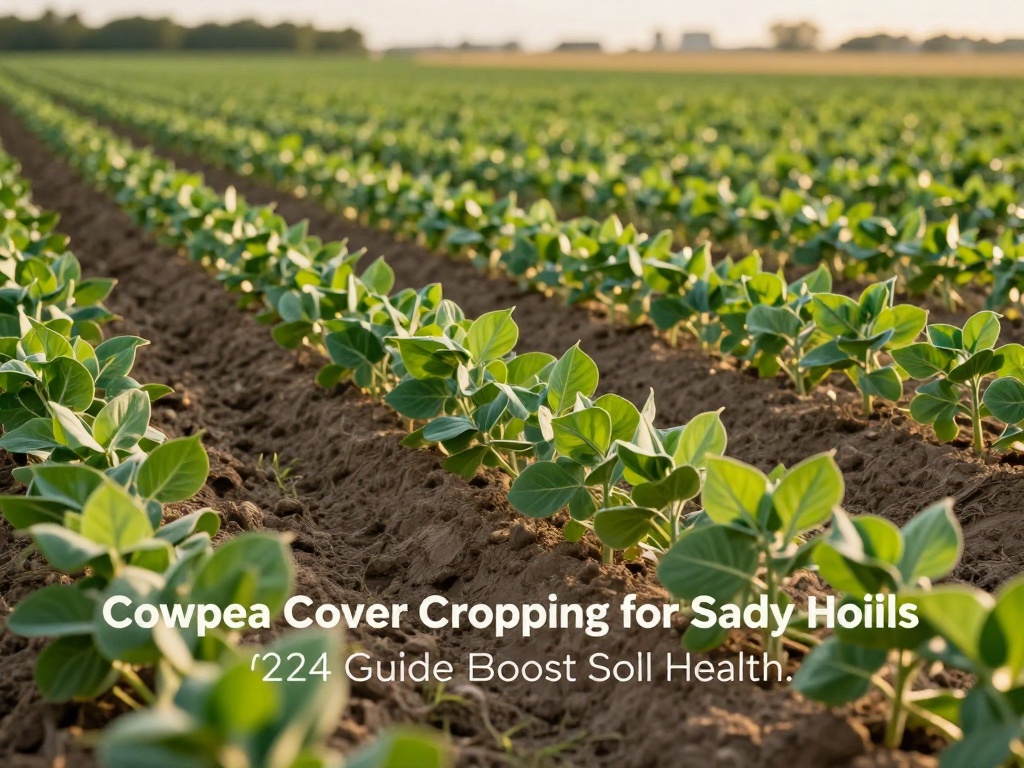
Cowpea Cover Cropping for Sandy Soils: 2024 Guide to Boost Soil Health
Cowpea cover cropping for sandy soils is a game-changing sustainable farming practice that addresses the biggest flaws of sandy growing environments: poor water retention, low organic matter, and rampant nutrient leaching. Sandy soils, which make up 16% of global farmland according to the United Nations Food and Agriculture Organization (FAO), struggle to support high-yield main crops without costly synthetic amendments. Cowpeas, a warm-season legume, are uniquely adapted to thrive in these conditions while repairing soil health over time.
Why Sandy Soils Need Specialized Cover Crops
Unique Challenges of Sandy Agricultural Soils
Sandy soils are composed of large, coarse particles that create large pore spaces between particles. Unlike loam or clay soils, these gaps let water and key nutrients like nitrogen and phosphorus drain away before plant roots can access them. They also hold less than 2% organic matter on average, per USDA Natural Resources Conservation Service (NRCS) data, limiting the soil’s ability to feed crops and sequester carbon.
Why Legumes Like Cowpeas Outperform Other Cover Crops
Most grass cover crops struggle to establish quickly enough in sandy soils to prevent erosion during heavy rain events. Legumes, by contrast, have deep taproots that can penetrate compacted sandy layers and fix atmospheric nitrogen to feed subsequent crops. Cowpeas are particularly drought-tolerant, making them ideal for the low-moisture conditions common in sandy soil growing regions.
Core Benefits of Cowpea Cover Cropping for Sandy Soils
Cowpeas deliver a suite of targeted benefits that directly solve sandy soil pain points, with peer-reviewed studies from the University of Florida recording 35% higher water retention in sandy soils after just one season of cowpea cover cropping. Key benefits include:
- Reduced nutrient leaching: Cowpea roots bind to soil particles, trapping nitrogen and phosphorus that would otherwise drain away, cutting synthetic fertilizer needs by 28% for subsequent corn crops, per University of Georgia research.
- Erosion control: The dense, low-growing canopy of cowpeas shields bare sandy soil from wind and rain erosion, reducing topsoil loss by 60% in coastal sandy farm regions, per NRCS data.
- Increased organic matter: When terminated and tilled under, cowpea biomass breaks down quickly, adding organic matter that improves sandy soil structure for future growing seasons.
- Weed suppression: The thick cowpea canopy outcompetes common weeds that thrive in bare sandy soils, reducing the need for herbicides by 40% for small-scale farmers.
How to Implement Cowpea Cover Cropping on Your Sandy Soil Farm
Planting Timeline and Seeding Rate
Cowpeas are warm-season crops, so plant them 2-3 weeks after the last frost date in your region, when soil temperatures reach at least 65°F (18°C). For sandy soils, use a seeding rate of 50-60 pounds per acre if drilled, or 70-80 pounds per acre if broadcast, to ensure a dense canopy forms quickly to protect soil. Inoculate seeds with a cowpea-specific rhizobium strain before planting to maximize nitrogen fixation, as many sandy soils lack natural rhizobium populations.
Termination Timing for Sandy Soil Systems
Terminate cowpeas 2-3 weeks before planting your main cash crop to allow the biomass to begin breaking down. For sandy soils, avoid leaving cowpeas unmanaged past their flowering stage, as mature biomass can take longer to decompose and temporarily lock up nutrients that your main crop needs. Most farmers terminate cowpeas with a light mowing or roller-crimper for no-till systems to preserve soil structure.
Frequently Asked Questions
Can cowpeas grow in all sandy soil types, including coastal sandy soils?
Yes, cowpeas are highly tolerant of the slightly saline conditions common in coastal sandy soils, making them a top cover crop choice for coastal farm regions. They also tolerate low pH levels common in many inland sandy soils, thriving in pH ranges from 5.5 to 7.5.
Can I rotate cowpea cover crops with any main cash crop?
Cowpeas work well with nearly all common row crops, including corn, cotton, and vegetables. They are especially beneficial for heavy feeder crops that require high nitrogen levels, as cowpeas can fix up to 150 pounds of nitrogen per acre to support these crops. Avoid rotating cowpeas with other leguminous cash crops like soybeans to prevent shared pest cycles.
Is cowpea cover cropping cost-effective for small-scale sandy soil farms?
Yes, cowpea seeds cost an average of $1.20 per pound, making them one of the most affordable cover crop options for small farms. Most small-scale farmers recoup their investment within one growing season via reduced fertilizer and herbicide costs, plus higher main crop yields from improved soil health.
No comments