
Organic Fertilizer Timing for Pecan Orchards: 6 Key Tips
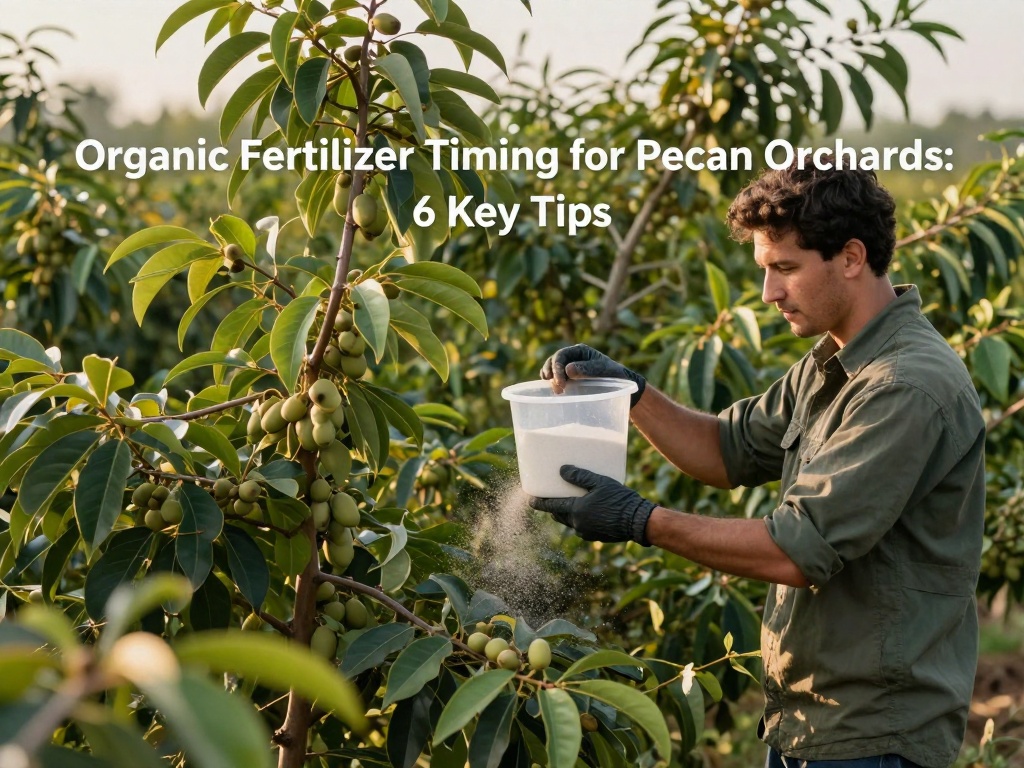
Organic Fertilizer Timing for Pecan Orchards: 6 Key Tips
Organic fertilizer timing for pecan orchards is one of the most impactful decisions for sustainable nut production and long-term tree health. Unlike synthetic fertilizers that release nutrients quickly, organic options break down slowly, so applying them at the wrong window can lead to missed nutrient uptake, reduced yields, or wasted organic amendments. Both small-scale pecan growers and commercial orchard operators can benefit from aligning fertilizer applications with pecan trees’ natural growth cycles, per guidance from Texas A&M AgriLife Extension and the University of Georgia Extension.

Why Organic Fertilizer Timing Matters for Pecan Orchards
Pecan trees have distinct seasonal growth phases, from dormancy in winter to active foliage growth, bloom, nut development, and leaf drop in fall. Each phase has unique nutrient needs, and organic fertilizers must be applied to coincide with periods when roots can absorb the released nutrients.
Misaligned timing can lead to nutrient leaching during heavy rains, insufficient foliage growth for photosynthesis, or poor nut set and filling. Proper organic fertilizer timing also supports soil microbial health, which amplifies nutrient availability over time for your orchard.
6 Critical Timing Windows for Organic Fertilizer on Pecan Trees
1. Late Winter Pre-Bud Break (February to Early March, Zones 6-9)
This is the most critical timing window for most pecan orchards. Apply balanced organic fertilizers (such as composted poultry manure or a 10-2-8 organic blend) just as bud scales begin to swell, but before new foliage emerges. This gives soil microbes time to break down the nutrients so they are ready for the first burst of spring growth.
2. Post-Bloom Nut Drop Period (Late Spring, 4-6 Weeks After Full Bloom)
Most pecan varieties experience a heavy natural nut drop in late spring, usually 6 to 8 weeks after bloom. Apply a nitrogen-rich organic fertilizer (such as fish emulsion or composted alfalfa meal) at this stage to support remaining nut development and reduce excessive early drop. Avoid overapplying nitrogen here, as it can encourage new foliage growth that competes with developing nuts.
3. Early Summer Nut Development Phase (June)
By June, pecan nuts begin to rapidly expand in size. Apply a potassium-boosted organic fertilizer (such as wood ash or a compost mix with added kelp meal) to support shell development and overall nut quality. This timing also helps trees build energy reserves for the following year’s bloom.
4. Mid-Summer Kernel Filling Stage (July to Early August)
This is the final push for nut development, as pecan kernels fill out with oils and proteins. Apply a low-nitrogen, high-phosphorus and potassium organic fertilizer (such as bone meal mixed with compost) to support kernel development without stimulating new leaf growth. Stop applying fertilizers by early August to let trees harden off before fall dormancy.
5. Late Fall After Leaf Drop (November to December)
After all leaves have fallen and trees are fully dormant, apply a thick layer of organic mulch (such as shredded leaves, pine straw, or composted bark) around the base of the tree, keeping it 6 inches away from the trunk to prevent rot. This mulch will break down over the winter, releasing slow-release nutrients and improving soil structure.
6. Soil Test-Aligned Custom Adjustments
Every pecan orchard has unique soil nutrient levels, so always conduct an annual soil test before applying organic fertilizers. The University of Georgia Extension recommends testing soil every 2 to 3 years to adjust fertilizer rates and timing based on specific deficiencies, such as low zinc or iron common in pecan orchards.

Choosing the Right Organic Fertilizer for Pecan Timing
Not all organic fertilizers are created equal, and matching your product to the timing window will maximize results. For spring growth, use balanced blends with equal nitrogen, phosphorus, and potassium. For nut development, shift to higher potassium and phosphorus formulas, and reserve nitrogen for post-bloom and early spring applications.
You can also integrate cover crops like clover or vetch between pecan rows to naturally add nitrogen to the soil, reducing the need for external organic fertilizers. Cover crops also help prevent soil erosion and support beneficial soil insects.
Common Mistakes to Avoid With Organic Fertilizer Timing
One of the most common mistakes is applying organic fertilizer too early in winter, when cold temperatures slow microbial breakdown and nutrients leach away with rain or snow. Another error is applying fertilizer during heavy rainfall, which can wash nutrients away before roots can absorb them.
Overapplying nitrogen is another frequent issue, as it can lead to excessive foliage growth at the cost of nut production. Finally, avoid piling mulch directly against the tree trunk, as this can create a moist environment that leads to fungal rot and pest infestations.
FAQ About Organic Fertilizer Timing for Pecan Orchards
When is the best time to apply organic fertilizer to pecan trees?
The ideal primary timing is late winter pre-bud break, with secondary applications during post-bloom drop, early summer nut development, and late fall mulching. Adjust based on soil test results and local growing conditions.
Can I apply organic fertilizer to pecan trees during the summer?
Yes, but only during the early summer nut development and mid-summer kernel filling stages. Avoid applying nitrogen-rich fertilizers after early August, as this can prevent trees from hardening off before dormancy.
How often should I apply organic fertilizer to my pecan orchard?
Most pecan orchards need 3 to 4 organic fertilizer applications per year: pre-bud break, post-bloom, early summer, and late fall mulch. Adjust frequency based on soil test results and tree age.
What organic fertilizer is best for pecan trees?
Balanced organic blends work for pre-bud break, while nitrogen-rich formulas support post-bloom growth, and high-phosphorus potassium blends aid nut development. Compost, manure, bone meal, and fish emulsion are all effective options.
No comments