
Oilseed Radish Cover Crop for Compacted Subsoil: 2024 Grower’s Guide
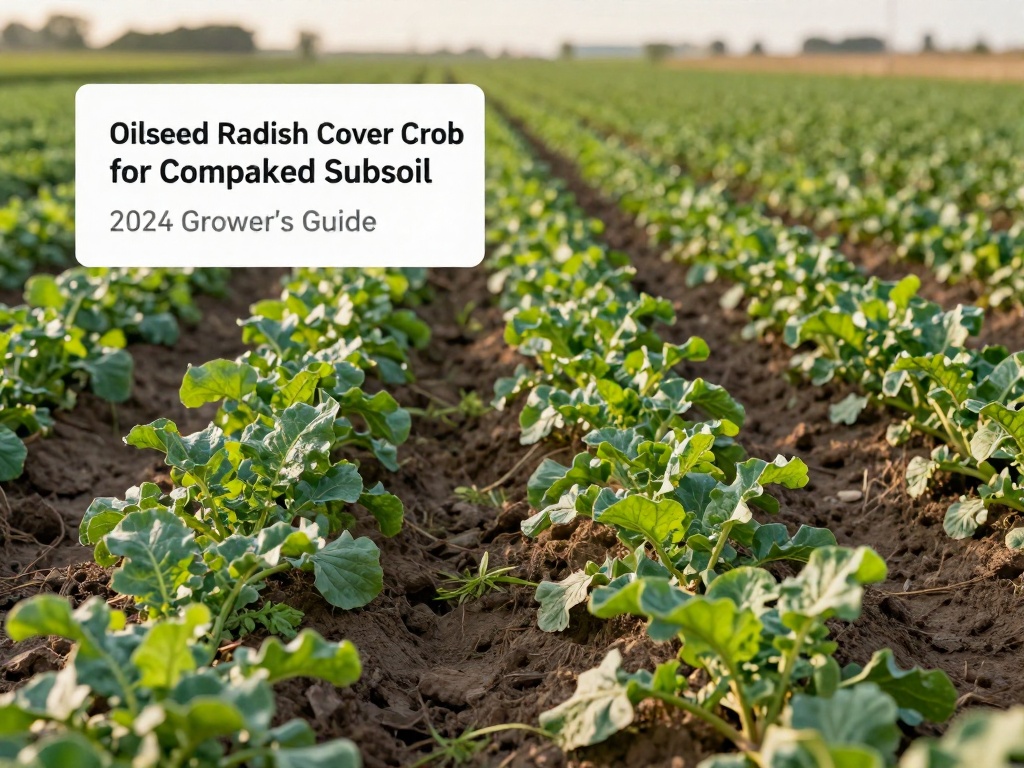
Oilseed Radish Cover Crop for Compacted Subsoil: 2024 Grower’s Guide
The oilseed radish cover crop for compacted subsoil is a game-changing natural solution for farmers struggling with hard, impenetrable soil layers that limit root growth and water infiltration. Unlike most shallow cover crops that only improve topsoil health, oilseed radish develops a thick, aggressive taproot that can penetrate up to 6 feet deep, targeting compacted subsoil layers often called hardpan. University of Illinois Extension studies confirm this taproot creates permanent soil pores that improve drainage and nutrient access for subsequent cash crops like corn or soybeans.
Why Oilseed Radish Outperforms Other Subsoil Remediation Methods
Cost-Effective Alternative to Mechanical Tillage
Mechanical subsoiling can cost farmers $30 to $60 per acre in fuel and equipment wear, according to 2024 data from the USDA Natural Resources Conservation Service (NRCS). Oilseed radish cover cropping costs just $15 to $25 per acre in seed and planting, delivering similar or better long-term compaction relief. Unlike tillage, which can disrupt existing soil structure and lead to new compaction events, radish roots create permanent macropores that hold up for multiple growing seasons.
Additional Soil Health Benefits Beyond Subsoil Penetration
Oilseed radish doesn’t only fix compaction: it scavenges excess nitrogen and phosphorus left in the soil after cash crop harvest, preventing nutrient runoff into local waterways. The USDA reports that oilseed radish can capture up to 150 pounds of leftover nitrogen per acre, making those nutrients available for the next year’s crop. It also suppresses common weeds like pigweed and reduces root-knot nematode populations in most temperate growing regions.
Best Practices to Plant Oilseed Radish for Maximum Compaction Relief
Timing Your Planting Window Correctly
To maximize taproot growth, plant oilseed radish 4 to 6 weeks before your region’s first average fall frost. This gives the crop enough time to develop its deep taproot before winter kill, which occurs in most northern and midwestern growing zones when temperatures drop below 20°F. In southern zones with mild winters, you will need to terminate the crop 2 weeks before spring planting to avoid it becoming a volunteer weed.
Seeding Rates and Planting Methods
NRCS recommends a seeding rate of 5 to 8 pounds per acre for drilled oilseed radish, or 8 to 10 pounds per acre for broadcast seeding to ensure adequate establishment. Drill seeds ½ to 1 inch deep in well-drained topsoil to support early root development. Avoid planting in waterlogged fields, as young radish roots are prone to rot in overly saturated conditions.
Pairing With Other Cover Crops for Full-Season Benefits
While oilseed radish works alone to target subsoil compaction, pairing it with cereal rye or hairy vetch creates a multi-functional cover crop mix. Cereal rye adds topsoil structure and prevents wind and water erosion, while hairy vetch adds supplemental nitrogen to the soil. The combination ensures you address compaction while supporting overall soil health throughout the off-season.
Frequently Asked Questions
How long does oilseed radish take to break up compacted subsoil?
Most growers see measurable improvements in subsoil penetration within one growing season. A 2023 Purdue University study found that after a single season of oilseed radish, subsoil bulk density (a key measure of compaction) dropped by 12% in fields with moderate hardpan. Severe compaction may require 2 to 3 consecutive seasons of planting oilseed radish to achieve full, long-term relief.
Will oilseed radish regrow the following spring if not terminated?
In regions with winter temperatures consistently below 20°F, oilseed radish will winter-kill completely, so it won’t regrow in spring. In mild southern zones, the crop can overwinter and flower, so you must terminate it with herbicides or light tillage 2 weeks before spring cash crop planting to avoid unwanted volunteer growth.
Can I plant oilseed radish after any cash crop?
Oilseed radish works well after most common row crops, including corn, soybeans, wheat, and cotton. The only exception is fields with a recent history of clubroot disease in brassica crops, as oilseed radish is a brassica and can host the pathogen, leading to issues for future brassica cash crops like canola.
No comments