
Cover Crop Termination Timing for Corn Farms: 2024 Guide to Boost Yields
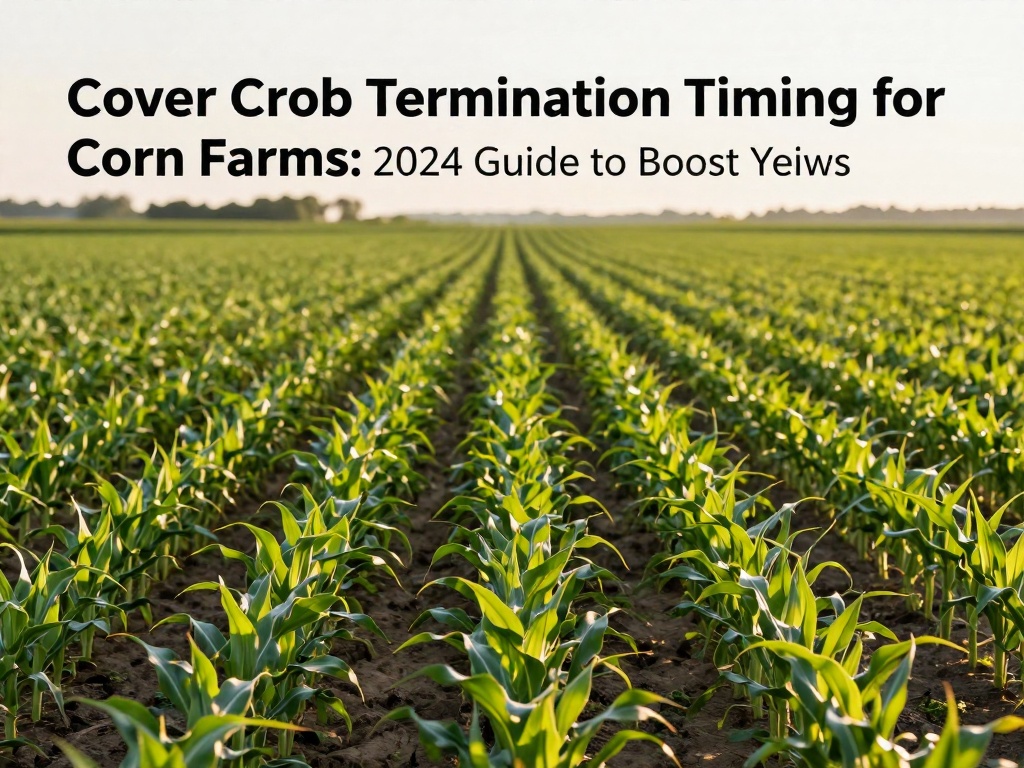
Cover Crop Termination Timing for Corn Farms: 2024 Guide to Boost Yields
Mastering cover crop termination timing for corn farms is the most impactful low-cost step producers can take to unlock cover crop benefits without risking corn establishment or early-season growth. A 2023 study from the University of Illinois found that poorly timed termination cuts corn yields by an average of 8 bushels per acre, while correctly timed termination adds 12 bushels per acre on top of $30 per acre in input savings from reduced erosion and weed pressure.
Core Termination Rules By Cover Crop Type
Termination timelines shift dramatically based on the type of cover crop planted in your corn rotation, as each species interacts with corn seedling health and soil nutrients differently. These are the most common cover crop types used before corn, and their optimal termination windows:
Grass Cover Crops (Cereal Rye, Wheat, Oats)
Grass covers, especially cereal rye (the most widely planted cover crop for corn systems), require strict timelines to avoid nitrogen tie-up and allelopathic interference that stunts young corn. The University of Nebraska-Lincoln Extension recommends terminating cereal rye at least 2 weeks before corn planting for most Midwest and Great Plains farms. This waiting period lets allelochemicals in rye residue break down before corn seeds germinate.
Legume Cover Crops (Hairy Vetch, Red Clover, Field Peas)
Legume covers fix atmospheric nitrogen to feed corn later in the growing season, so their termination rules prioritize retaining that valuable nutrient. Producers can terminate hairy vetch or red clover up to 3 days before corn planting, or use a roller-crimper to terminate vetch at planting for no-till systems. A 2024 Iowa State University study found that late termination of hairy vetch delivers an extra 40 pounds of available nitrogen per acre, cutting commercial fertilizer costs by $25 per acre.
Brassica Cover Crops (Forage Radish, Turnip, Mustard)
Brassicas, known for their deep taproots that break up compacted soil, winterkill in most U.S. corn-growing zones once temperatures drop below 20°F, so they rarely require intentional termination. If you farm in a mild winter region where brassicas survive, terminate them at least 3 weeks before corn planting to avoid pest carryover from brassica foliage to young corn seedlings.
Regional Adjustments to Termination Timing
General timelines need small tweaks to align with regional corn planting dates and spring climate patterns. Misaligned regional timelines account for 60% of cover crop-related corn yield losses, per Ohio State University Extension data. Here are tailored rules for the top U.S. corn-growing regions:
- Midwest Corn Belt (Illinois, Iowa, Indiana): Terminate cereal rye 10–14 days before typical early-May corn planting dates to let soil warm properly. Corn planted into cold, undisturbed rye residue is 3x more likely to suffer from seedling blight.
- Southern Corn Belt (Texas, Oklahoma, Georgia): Corn planting starts as early as mid-March, so terminate rye 2–3 weeks before planting to avoid rapid late-winter rye growth that leads to excessive biomass buildup. Mild winters let rye grow twice as fast in Southern zones as in the Midwest.
- Northern Corn Belt (Minnesota, Wisconsin, North Dakota): Corn planting starts in mid-May, so you can delay cereal rye termination until 7 days before planting to capture extra biomass for weed suppression. Cold spring temperatures slow rye growth enough to eliminate allelopathic risks.
Common Termination Mistakes to Avoid
Even producers who follow general timelines can make costly errors that erase cover crop benefits. The most common mistake is terminating cereal rye less than 7 days before corn planting, which causes 5–10 bushel per acre yield losses from competition and allelopathy. Another widespread error is terminating covers too early, which wastes 4–6 weeks of weed suppression and soil carbon building that late termination would capture. Always track your soil temperature at 2 inches deep to align termination with your planned corn planting window.
Frequently Asked Questions
Can I terminate cover crops after I plant corn?
Terminating a winter cover crop after corn planting is never recommended, per University of Illinois research. Post-plant termination of cereal rye leads to 8–12 bushel per acre yield losses due to rapid resource competition during corn’s critical early growth stage. Interseeding summer cover crops after corn emergence is safe, however.
What termination method works best for no-till corn farms?
For no-till systems, glyphosate-based herbicides work well for terminating grass covers, while roller-crimpers are ideal for legume covers like hairy vetch. Roller-crimping works best when vetch reaches 50% bloom, which aligns with typical early corn planting dates for most Midwestern farms, delivering 6–8 weeks of natural weed suppression.
How do wet springs that delay corn planting impact termination timing?
If a wet spring delays your corn planting by 2 or more weeks, terminate cereal rye early with a low-rate herbicide to stop its growth. This prevents rye from growing over 3 feet tall, the threshold for risky nitrogen tie-up and allelopathic interference. Once fields dry out, you can plant corn into mature, stable rye residue without yield risks.
No comments