
Boron Supplementation for Alfalfa Crops: 2024 Guide to Boost Yields & Longevity
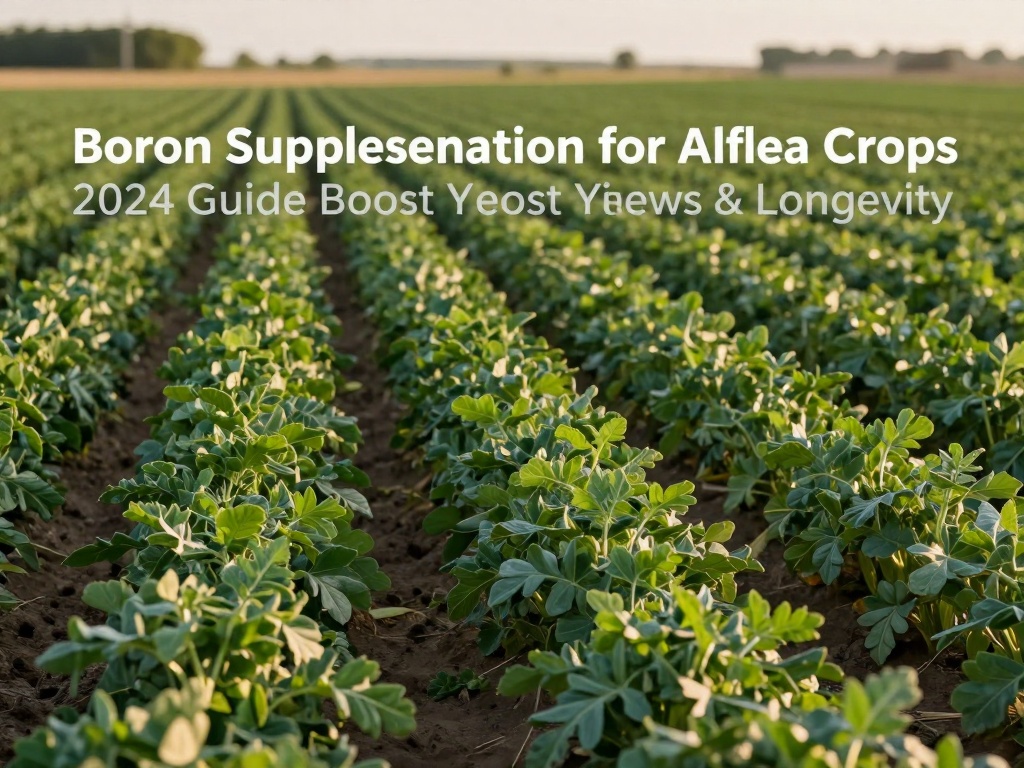
Boron Supplementation for Alfalfa Crops: 2024 Guide to Boost Yields & Stand Longevity
Alfalfa is one of the most boron-dependent forage crops, and proper boron supplementation for alfalfa crops can deliver transformative results for farm profitability. University of Minnesota Extension data shows that correcting boron deficiencies can boost alfalfa yields by up to 20% while extending the lifespan of perennial stands by 1 to 2 years. Boron is a mobile micronutrient that leaches easily from many soil types, making regular testing and targeted supplementation a core part of alfalfa management.
Why Alfalfa Needs Consistent Boron Supplementation
Boron’s Core Functions in Alfalfa Growth
Boron supports three non-negotiable biological processes for healthy alfalfa: cell wall formation, nitrogen fixation in root nodules, and flower and seed development. The USDA estimates that a high-yielding alfalfa stand removes 0.2 to 0.5 pounds of boron per acre from the soil annually. Unlike many other micronutrients, boron cannot be remobilized from old plant tissue to support new growth, so a constant supply is required throughout the growing season.
Common Boron Deficiency Warning Signs
Untreated boron deficiency causes measurable losses in forage quality and yield, with symptoms first appearing in young, newly emerged plant tissue. Common signs include yellowing of new leaves, stunted root growth, poor root nodulation, hollow stems, and drastically reduced flower set. Deficiencies are most common in sandy soils, high-pH soils above 7.5, and soils with less than 2% organic matter, all of which are prone to rapid boron leaching.
Pre-Supplementation Testing to Avoid Wasted Inputs
Soil Testing Best Practices
Before applying any boron, conduct a soil test to confirm current levels, as over-application can lead to costly toxicity. Penn State Extension recommends a target soil boron level of 0.5 to 1.0 ppm for optimal alfalfa growth. Test soils every 2 to 3 years, or immediately after heavy rainfall or flooding events that can leach boron from the root zone.
Tissue Testing for Hidden Deficiencies
Soil tests only tell part of the story, so pair them with annual tissue testing to catch hidden deficiencies before visual symptoms appear. Collect samples of young, fully expanded alfalfa leaves at the early bloom stage for the most accurate results. Target tissue boron levels range from 20 to 30 ppm; levels below 20 ppm indicate a need for immediate supplementation.
Expert-Recommended Boron Supplementation Strategies
Optimal Application Timing and Rates
Base your application rate on your soil and tissue test results to avoid waste and toxicity. For most loam soils with test levels below 0.5 ppm, broadcast 1 to 3 pounds of elemental boron per acre once every 2 to 3 years. Sandy, low-organic-matter soils may require annual applications of 0.5 to 1 pound of boron per acre to replace leached micronutrients.
Application Methods for Maximum Efficiency
The most efficient application method depends on whether you are correcting an acute deficiency or maintaining adequate levels. Broadcast applications work best for long-term soil maintenance, while foliar applications of 0.25 to 0.5 pounds of boron per acre are ideal for correcting mid-season deficiencies. Avoid foliar applications during full bloom to prevent unintended harm to pollinators.
The ROI of Boron Supplementation for Alfalfa
A 2023 University of Wisconsin study found that alfalfa stands with adequate boron levels produced an average of 1.8 additional tons of dry matter per acre annually. That translates to $150 to $200 in additional revenue per acre, even after accounting for the cost of boron and application. Stands with sufficient boron also last 1 to 2 years longer than deficient stands, reducing the average $300 per acre cost of reseeding alfalfa.
Frequently Asked Questions
Can too much boron harm my alfalfa stand?
Yes, boron toxicity can occur if you apply more than 5 pounds of elemental boron per acre in a single growing season. Toxicity causes leaf burn, stunted growth, and reduced yields, and can also harm rotational crops like corn or soybeans that are less tolerant of high boron levels. Always base application rates on soil and tissue test results to avoid over-application.
Can I apply boron with other fertilizers or pesticides?
Most commercial boron products are compatible with common alfalfa herbicides, insecticides, and nitrogen fertilizers. Always check the product label for tank-mix compatibility before combining any inputs to avoid product breakdown or crop injury. This practice also reduces application costs by cutting down on the number of trips across your fields.
Is organic boron supplementation allowed for certified organic alfalfa?
Yes, sodium borate (common borax) is approved for use in certified organic operations by the USDA National Organic Program. Most organic certifiers allow boron supplementation to correct documented deficiencies, so you will need to share your soil or tissue test results with your certifier before application to maintain compliance.
No comments