
2024 Proven Guide to Corn Crop Nitrogen Side-Dress Timing for Max Yields
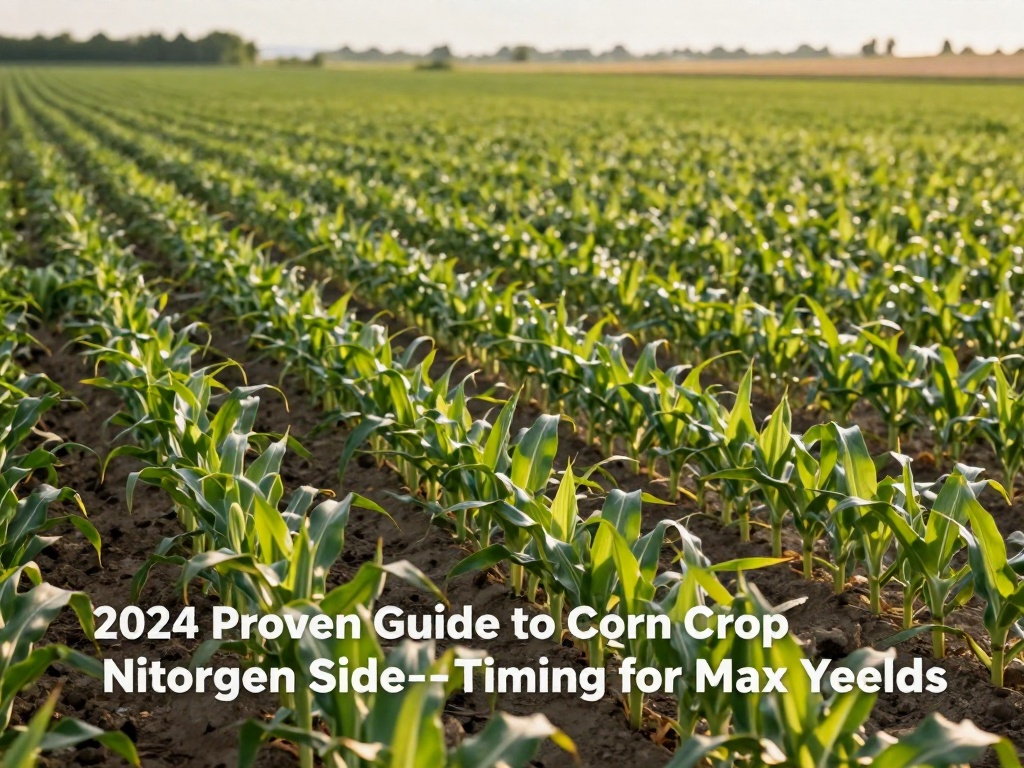
2024 Proven Guide to Corn Crop Nitrogen Side-Dress Timing for Maximum Yields
Corn crop nitrogen side-dress timing is one of the highest-impact management decisions corn farmers make each growing season, per 2023 data from the University of Illinois Extension. Proper timing ensures corn plants access nitrogen when their nutrient demand peaks, reducing losses from leaching, volatilization, and runoff that cost U.S. corn farmers an estimated $1.3 billion annually. Misaligned timing can cut yields by 10-15% even when sufficient total nitrogen is applied, making this practice non-negotiable for high-performance operations.
Why Corn’s Nitrogen Demand Makes Side-Dress Timing Critical
Corn’s nitrogen requirement is not uniform throughout its growth cycle. Young corn seedlings only need about 10% of their total seasonal nitrogen in the first 30 days after planting, per Iowa State University Extension research. This means most pre-plant nitrogen applications are vulnerable to loss before corn enters its rapid vegetative growth stage, when demand skyrockets.
Corn’s Peak Nitrogen Uptake Window
Between the V6 (six-leaf) and tasseling (VT) growth stages, corn takes up 70% of its total seasonal nitrogen. That’s roughly 4 pounds of nitrogen per acre per day for most high-yield corn hybrids targeting 250-bushel yields. Side-dressing nitrogen right before this peak uptake window eliminates the gap between application and plant demand, cutting loss risks by up to 40% compared to pre-plant applications, per 2024 USDA Sustainable Agriculture Research and Education (SARE) data.
Optimal Corn Crop Nitrogen Side-Dress Timing By Growth Stage
V4 to V6 Growth Stage: The Gold Standard Timing
The most widely recommended window for side-dressing nitrogen is when corn reaches the V4 to V6 growth stage, roughly 30 to 45 days after planting. At this point, corn’s root system is developed enough to rapidly take up applied nitrogen, and the window before peak demand is narrow enough to minimize loss risks. For most corn-growing regions, this timing aligns with manageable spring weather conditions that avoid waterlogging that can prevent field operations.
Adjusting Timing For Late-Planted Or Stress-Affected Corn
Farmers with late-planted corn (planted 2+ weeks behind regional averages) or corn that experienced early-season stress (frost, drought, flooding) can push side-dress timing to the V7 growth stage without yield penalties, per University of Nebraska-Lincoln research. However, delaying side-dress past the V8 stage increases the risk of yield loss, as corn’s peak nitrogen demand starts before most farmers can complete large-scale application operations.
Regional Adjustments For Soil Type And Climate
Sandy soils with high leaching risk require earlier side-dress timing (V4) to avoid losing pre-plant nitrogen reserves before corn needs it. In high-rainfall regions like the Midwest and Southeast, side-dressing at V4 also reduces the risk of heavy summer rains washing away nitrogen before it can be taken up. For heavy, clay soils in drier regions like the High Plains, V6 timing is safe, as leaching and volatilization risks are much lower.
Common Mistakes To Avoid With Side-Dress Timing
The most costly timing mistake is delaying application to accommodate other farm operations, leading to applications after V8 that miss peak uptake. Another common error is applying side-dress nitrogen too early (before V3), when young corn roots cannot reach the applied nitrogen, leading to 20-25% higher loss rates, per SARE data.
Farmers should also account for nitrogen source when planning timing. Urea-based nitrogen sources require a urease inhibitor if applied more than 10 days before forecast rain, to prevent volatilization losses. Anhydrous ammonia can be applied slightly earlier, as it binds to soil moisture and is less vulnerable to short-term loss.
Getting corn crop nitrogen side-dress timing right is a low-cost, high-return practice that delivers consistent yield gains for corn farmers across all U.S. growing regions. By aligning application with corn’s growth stages and local soil and climate conditions, farmers can maximize nutrient use efficiency, reduce input waste, and boost annual farm profits.
Frequently Asked Questions
Can I side-dress nitrogen on corn after it starts tasseling?
It is not recommended to side-dress nitrogen after corn reaches the VT (tasseling) growth stage. Corn has already taken up 90% of its seasonal nitrogen by tasseling, so additional applications will not boost yields and will only increase input costs and environmental risk.
How much nitrogen should I apply during side-dress for corn?
Most corn hybrids require a total of 1.2 pounds of nitrogen per bushel of expected yield. Farmers can subtract any pre-plant or starter nitrogen applied to calculate side-dress rates, so a 250-bushel yield goal with 50 pounds of starter nitrogen would require 250 pounds of side-dress nitrogen.
Does cover cropping impact corn crop nitrogen side-dress timing?
Leguminous cover crops like hairy vetch can add 50 to 100 pounds of residual nitrogen to the soil, allowing farmers to reduce side-dress rates, but timing remains the same. Grass cover crops like cereal rye may tie up early-season nitrogen, so farmers can add a small starter nitrogen application and keep side-dress timing at V4 to avoid early-season nitrogen deficiency.
No comments