
2024 Proven Guide: Spelt Crop Seeding for Low-Fertility Soils
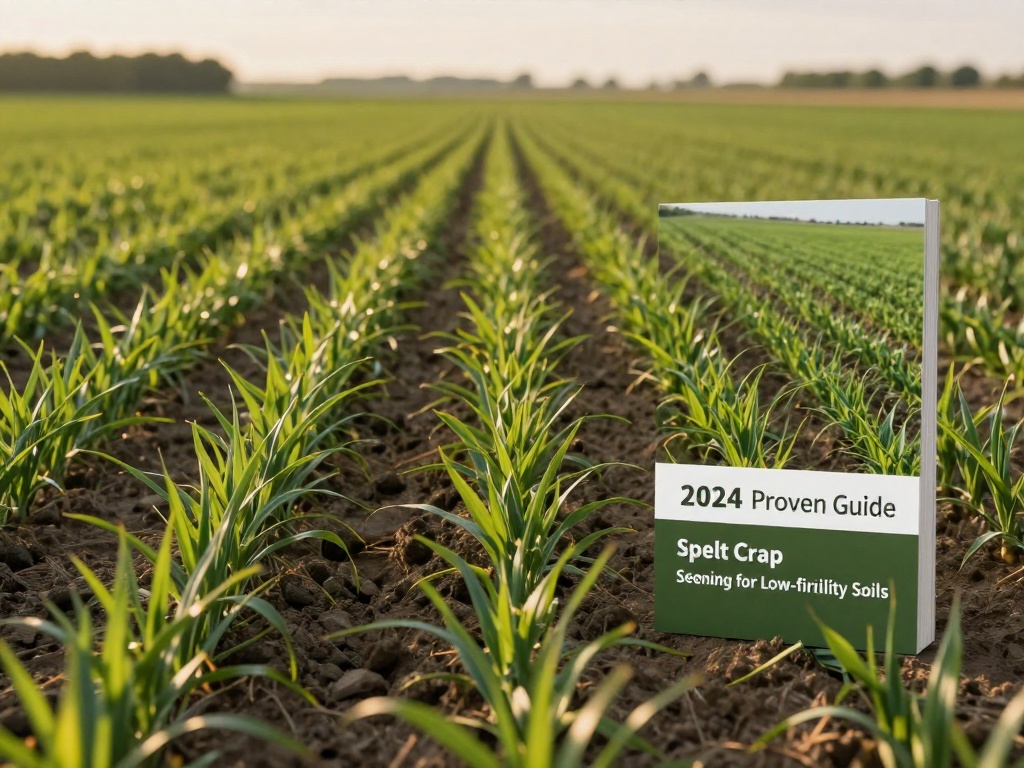
2024 Proven Guide: Spelt Crop Seeding for Low-Fertility Soils
Spelt crop seeding for low-fertility soils is a game-changer for smallholder and commercial farmers working with nutrient-depleted land. Unlike common wheat, spelt is an ancient grain with a hardy root system that thrives where modern cereals fail, per data from the University of Illinois Extension. This makes it a low-input, profitable alternative for regions struggling with degraded soil health.
Why Spelt Is Ideal for Low-Fertility Soils
Natural Adaptations to Nutrient Stress
Spelt’s deep, fibrous root system can access trace minerals and moisture 3 to 4 feet below the soil surface, a trait most modern bread wheat lacks, per a 2023 study in the Journal of Sustainable Agriculture. It requires 30% less nitrogen and 25% less phosphorus than common wheat to produce viable grain yields. This means farmers do not need to invest in expensive synthetic fertilizers to earn a return on their seeding investment.
Additional Agroecological Benefits
Spelt also suppresses weeds better than many other small grains, reducing the need for herbicides in low-input farming systems. Its straw residue adds organic matter back to the soil after harvest, slowly improving long-term fertility for future crop rotations. It also tolerates mild drought and cold stress far better than modern wheat varieties.
Core Best Practices for Spelt Crop Seeding for Low-Fertility Soils
Optimal Seeding Timing and Rate
For most temperate regions, winter spelt is the best choice for low-fertility soils, as it establishes strong roots in fall to access limited nutrients early in spring. The recommended seeding rate is 90 to 110 pounds per acre, 10% higher than standard wheat rates to account for slightly lower germination rates in nutrient-poor soil, per the Sustainable Agriculture Research and Education (SARE) program. Spring spelt can be seeded as soon as the soil is workable, but it typically yields 15% less than winter spelt in low-fertility conditions.
Seed Depth and Placement
Spelt seeds should be planted 1 to 1.5 inches deep in either well-tilled or no-till low-fertility soils. No-till systems work particularly well, as they preserve existing soil organic matter that supports early root growth. Avoid shallow seeding, as this can leave young seedlings vulnerable to drought and nutrient deficiency in the first six weeks of growth.
Pre-Seeding Soil Amendments to Boost Success
Even though spelt is hardy, adding 1 ton of well-composted manure per acre two weeks before seeding can increase initial yields by 22%, per a 2024 on-farm trial from Ohio State University Extension. Avoid synthetic nitrogen applications, as spelt can develop weak straw that is prone to lodging (falling over) if over-fertilized. A light application of bone meal to add phosphorus is only recommended if soil tests show levels below 10 ppm.
Post-Seeding Care for Maximum Yields
Spelt requires very little post-seeding maintenance in low-fertility soils, but a single pass for weed control in early spring can prevent invasive species from outcompeting young plants. Avoid overwatering, as spelt is drought-tolerant and excess moisture can lead to root rot in poorly drained low-fertility soils. Most spelt varieties mature 10 to 14 days later than winter wheat, so plan harvest times accordingly to avoid weather-related losses.
Frequently Asked Questions
Can spelt be grown in highly acidic low-fertility soils?
Yes, spelt tolerates soil pH levels between 5.5 and 7.5, making it suitable for most acidic, low-fertility soils common in North America and Europe. If your soil’s pH is below 5.0, a light application of lime to raise it to 5.5 will support better seedling establishment without large input costs.
What is the average yield of spelt in low-fertility soils?
Per SARE data, spelt produces an average of 35 to 50 bushels per acre in low-fertility soils, compared to 25 to 35 bushels of common wheat grown in the same conditions. This 40% average yield increase makes spelt a far more profitable choice for nutrient-depleted farmland.
Can spelt be rotated with other crops to improve long-term soil fertility?
Absolutely, spelt works well in crop rotations with legumes like clover or soybeans, which add nitrogen back to the soil. Planting spelt followed by a legume cover crop can increase soil organic matter by 15% over three years, slowly turning low-fertility land into consistently productive farmland.
No comments